🤖 NEO robot from 1X: The Future of Home Help or Premature Hype?
🏠 Imagine having an assistant in your home that does the dishes, folds laundry, and even tells jokes without asking for a salary. 💫 1X Technologies has introduced NEO, a robot that promises to revolutionize everyday life. But is it ready for real life, or is it just a $20,000 TV gadget? 🎯 Spoiler alert: at the start, NEO combines autonomy with human intervention, but over time, it can become completely independent.
⚡In Brief
✅ Key Point 1: NEO is a humanoid robot for the home, weighing 30 kg, capable of lifting up to 70 kg and working for 4 hours on a charge.
✅ Key Takeaway 2: At launch, it is partially televised, but learns through AI to become fully autonomous.
✅ Key Takeaway 3: Price $20,000 or $499/month; deliveries from 2026, with a focus on security and privacy.
🎯 You'll get: A detailed overview of NEO's specifications, advantages, disadvantages, and prospects.
"Humanoids have been a long time science fiction, then research, but with the launch of NEO, they are becoming a product." - Ber Bornich, CEO of 1X Technologies.
🎯 What is NEO?
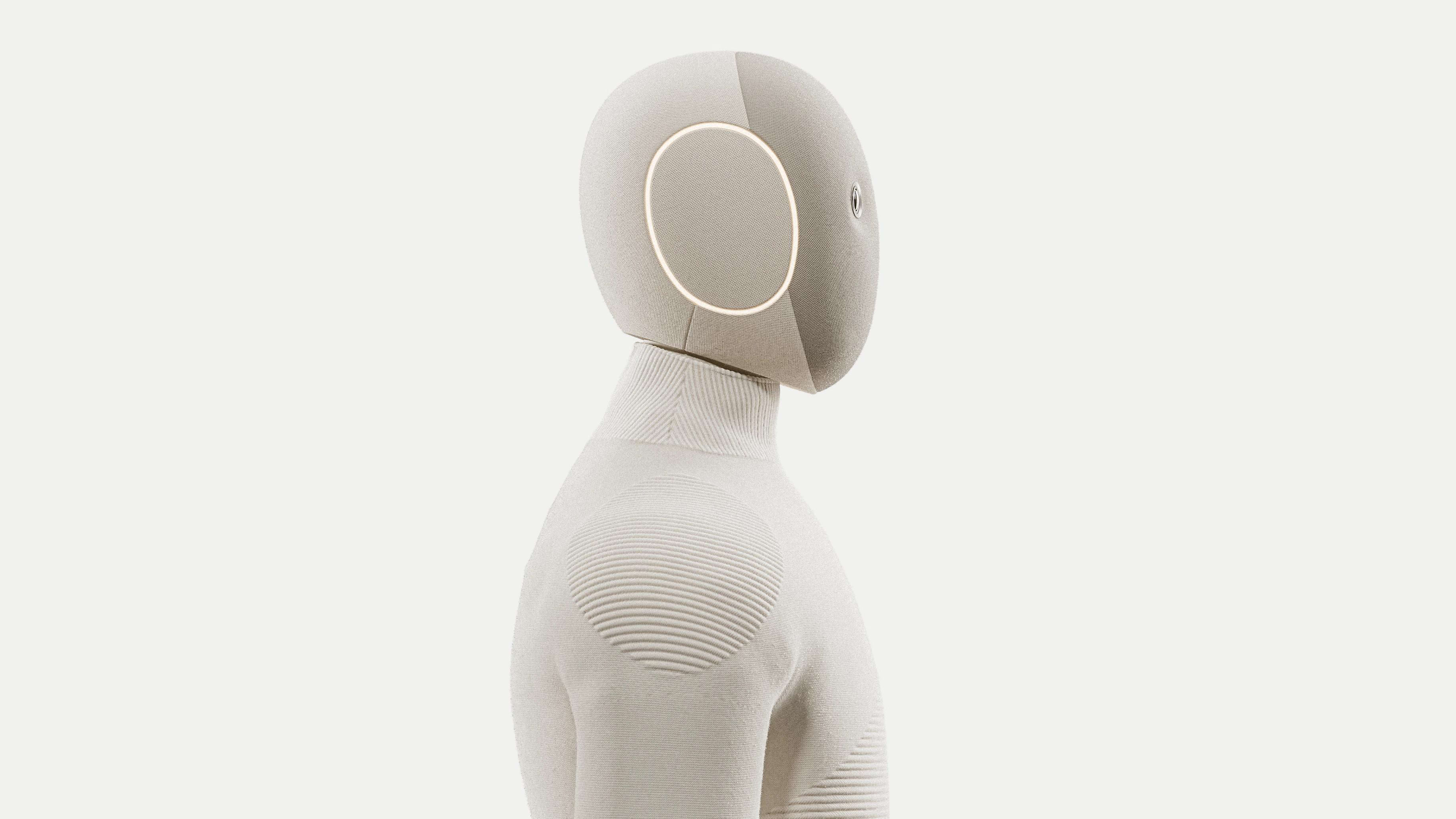
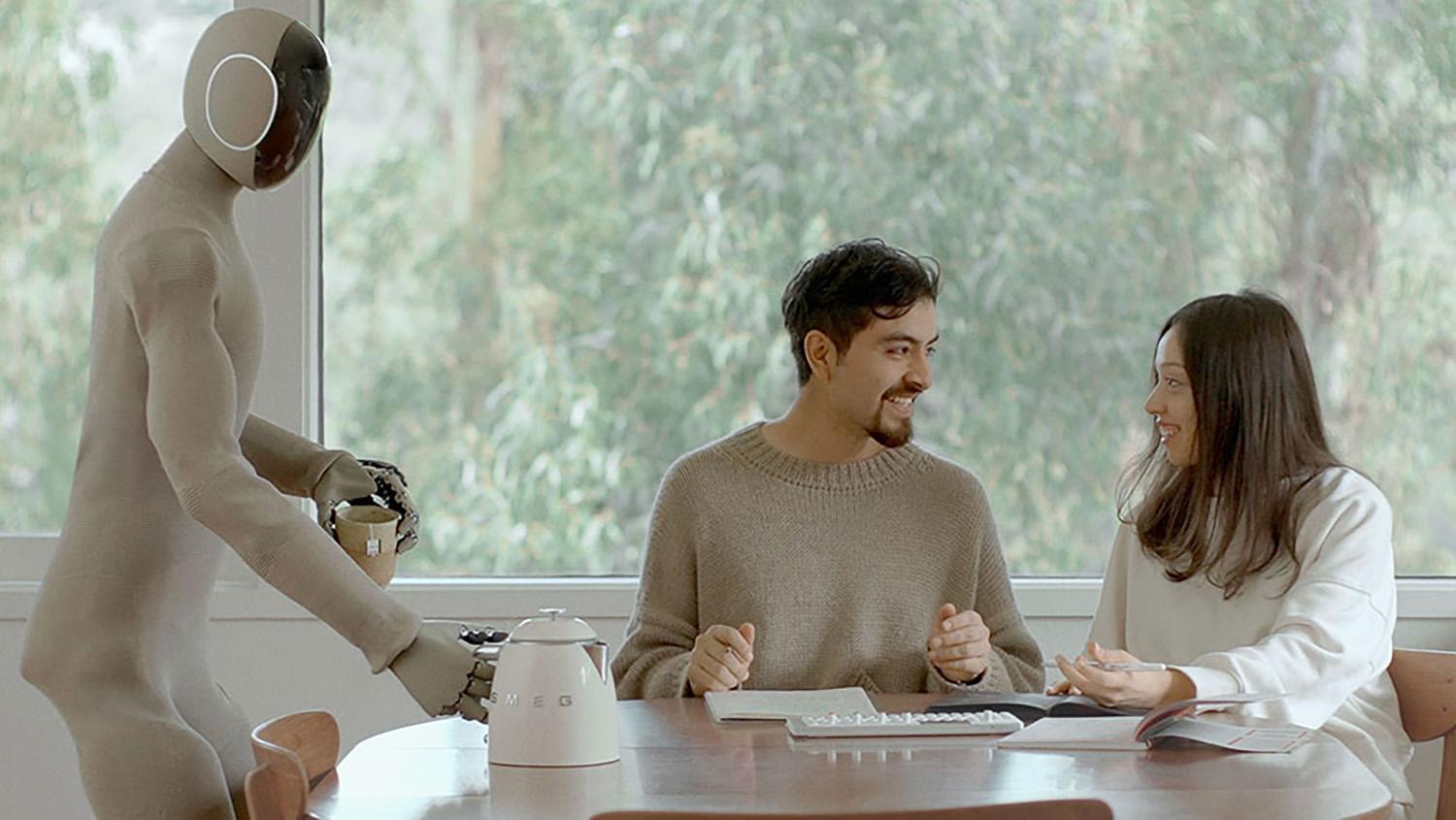
🤖 NEO is a humanoid robot from the Norwegian-American company 1X Technologies designed to help in the home. It performs routine tasks such as cleaning 🧹, folding things 👕, and even communicating with users 💬. Designed with a focus on safety and integration into everyday life, NEO uses AI to learn and adapt.
🚶 Point 1: The bipedal design allows you to move around the house, open doors 🚪, and interact with objects.
📱 Point 2: Integration with a mobile app for task scheduling 📅 and remote control.
🎭 Point 3: Companion features: storytelling 📖, jokes 😄, and games 🎮 for fun.
🎬 Example: In the demo video, NEO folds laundry, washes dishes 🍽️, and watered plants 🌱, demonstrating its flexibility of movement.
⚠️ Important: At launch, NEO is not fully autonomous, which raises questions about its readiness.
✅ Quick takeaway: NEO is a step towards a future where robots are part of the household, but right now it's a combination of technology and human intervention.
⸻
🔬 NEO Specifications
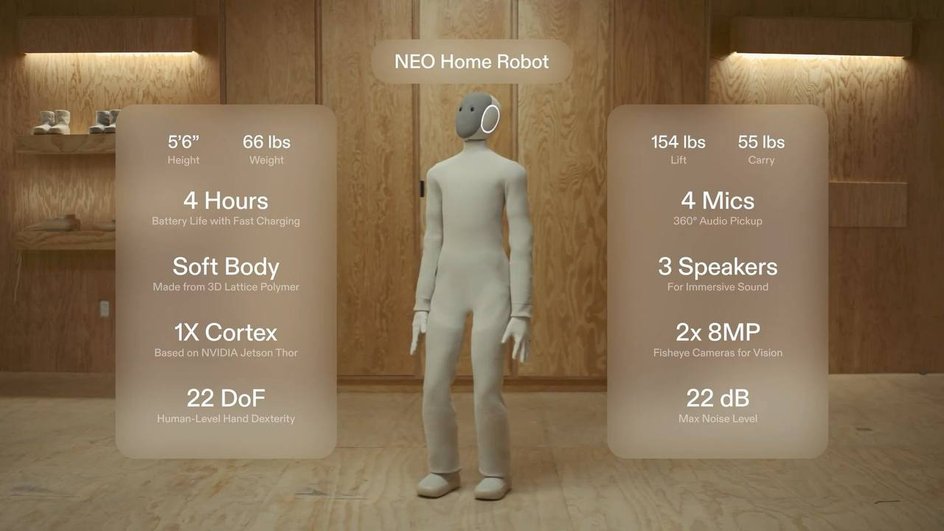
NEO is equipped with advanced components that ensure accuracy, safety, and efficiency. It weighs 30 kg, stands 167 cm tall, and can operate quietly at 22 dB.
📈 Physical parameters
Parameter
Value
Height
167 cm
Weight
30 kg (66 lbs)
Noise level Noise Level
22 dB (quieter than a modern refrigerator)
Color
Tan, Gray, Dark Brown
Body design
Soft body made of 3D polymeric structures, knitted suit and shoes
📈 Performance parameters
Parameter
Value
Battery life battery life
4 hours
Lifting capacity
Over 68 kg (150 lbs)
Bearing capacity
25 kg (55 lbs)
Arms (degrees of freedom)
22 DoF for human level dexterity
Actuation
Patented Tendon Drive with high torque
Audio system
4 microphones with beamforming and echo cancellation, 3 speakers (chest and pelvis)
Connections
WiFi, Bluetooth, 5G
✅ Quick conclusion: The technical specifications make NEO versatile, but the limited autonomy requires improvements.
NEO uses the Redwood AI model for task recognition and learning. At the start, complex actions require teleconsultation from 1X experts.
✅ Benefits
✅ Fast training through data from operators.
✅ Integration with LLM for natural language.
✅ Self-checkout and navigation.
❌ Disadvantages
❌ Dependence on human intervention in the beginning.
❌ Limited autonomy in demonstrations (only 47 seconds out of 10 minutes).
❌ Potential real-time delays.
💡 Expert Tip: For early adopters, NEO is an investment in technology that will improve with updates.
⸻
📅 Launch, price, and availability
💰 Launch, price, and availability
🚀 NEO launched on October 28, 2025 with pre-orders on the 1X website. This was a significant event in the world of robotics, as NEO became the first consumer humanoid robot for the home available to a wide audience.
💵 The price is $20,000 for a full purchase or $499/month for a rental (with a minimum term of 6 months). Deliveries will start in 2026 for early users, with a focus on an early access program where the robot is gradually improved.
💳 Point 1: A $200 deposit for the order, which is fully refundable; this allows you to reserve a place in the delivery queue.
🇺🇸 Point 2: Available in the US initially, with plans to expand to other regions; shipping starts with US customers.
🔧 Point 3: Early access testing program where NEO offers basic autonomy and learns new skills over time through user data and tele-management; this includes access to AI updates and support from 1X experts.
🌐 Point 4: Pre-orders available at official website 1x.tech/order, with payment options for both one-time ($20,000) and monthly ($499/month); a minimum 6-month lease is required to allow for data collection to improve the robot's AI and functionality.
📺 Example: In a demo for The Wall Street Journal, NEO showed TV guidance for tasks like folding laundry 👕 or washing dishes 🍽️, where remote operators helped the robot learn. Also, in a video on X, users shared their impressions of the launch, for example, about the potential of NEO as a home assistant, but with a touch of skepticism about the price.
🔒 Important: The company emphasizes that this is an evolutionary product - NEO starts with basic autonomy and improves over time through user data collection and teleoperation; users must agree to potential access by operators through cameras to train AI, with an emphasis on privacy (data is deleted within 24 hours).
✅ Rapid conclusion: Accessibility makes NEO a real step towards mass adoption of humanoid robots, but the high price and reliance on teleoperation make it more of a beta investment for enthusiasts than a ready-made product for everyone.
⸻
📹 Demos and user feedback
The demo videos have gained millions of views, but have drawn skepticism due to the teleoperation. The official demonstrations from 1X show NEO in action, performing household tasks, but many note that at launch, the robot is largely dependent on remote human control. More information about the demos can be found on the official NEO website.
📊NEO Design
On Twitter and elsewhere, users are praising NEO's design for its anthropomorphic appearance and quiet operation, but criticizing privacy due to cameras and microphones, as well as the speed of tasks, which seems slow in the demos. Journalists and columnists such as the WSJ's Joanna Stern have conducted hands-on tests, noting the potential but also the "weirdness" of the teleoperation. Official demo videos are available on the official 1X website, showing NEO performing chores.
✅ Point 1: Positive: Impressive manual dexterity - NEO can fold laundry, wash dishes, and even prepare simple drinks with human-like accuracy.
✅ Point 2: Negative: Memes about a $20k "live intern" - users joke that it's essentially a remote worker in a robot suit, with potential privacy issues due to constant surveillance.
✅ Point 3: Mixed reviews from journalists - for example, Engadget praises the idea of learning through tele-management, but Gizmodo calls it a "robotics slip" for imperfect autonomy.
✅ Point 4: Positive: Innovative design - the soft body and quiet operation make NEO safe for the home, as noted by Mashable and Tom's Guide.
✅ Point 5: Negative: Limitations - satirical reviews like Liberty Line call NEO a "$20,000 cleaning robot that can't go outside," emphasizing the narrow functionality.
👉 Example: In a video from the WSJ, NEO slowly closes the dishwasher, which has become a meme on social media, where users compare it to a "robot that thinks about life." Another example is a demo from Forbes, where a robot watered plants, but with delays due to TV control. The official demo videos are available at official website.
⚡ Important: Many have compared NEO to Tesla's Optimus, noting that NEO focuses on household tasks but is currently less autonomous; this is sparking discussions about the future of robotics in the press.
✅ Rapid conclusion: The demos show NEO's potential as a home assistant, but real-world reviews highlight limitations in autonomy, privacy, and speed, making it more of an experiment for enthusiasts.
⸻
🚀 1X's plans for the future
1X plans to deploy NEO in hundreds of homes to collect data and improve AI. Full autonomy is expected by 2027.
✅ Benefits
✅ Expanding functionality through updates.
✅ Integration with OpenAI.Global expansion.
✅ Global expansion.
❌ Disadvantages
❌ Delays in delivery.
❌ Dependence on investments.
❌ Competition.
💡 Expert Tip: Follow the updates on the 1X website.
⸻
⚖️ Comparison with other robots
1X's NEO focuses on home use with a focus on safety and integration into the home, while Tesla's Optimus is focused on industry with plans to expand into the home. Other competitors, such as Figure 01 by Figure AI and Apollo by Apptronik, are more focused on commercial applications. Below is a detailed comparison of the key humanoid robots of 2025 based on available specifications. More information about the specifications can be found at 1X's official website and the Tesla Optimus website.
📈 Comparison Table
📊 Criterion
🤖 NEO (1X)
💰 Price
$20,000 (or $499/month)
🤖 Autonomy
Partial (AI teleoperation)
🎯 Focus
🏠 Home (chores, companion)
📏 Height
167 cm
⚖️ Weight
30 kg
🔋 Working time
4 hours
💪 Lifting force
Up to 70 kg
🏃 Speed
1 m/s
📅 Availability
Pre-order 2025, shipments 2026
🚗 Optimus Gen 2 (Tesla)
👨💼 Figure 01 (Figure AI)
$20,000-$30,000 (plan for 2026)
Not disclosed (commercial)
Full (promised, with FSD AI)
Full (with OpenAI integration)
🏭Industrial/Home
🏭Industrial/Home
173 cm
168 cm
57 kg
60 kg
8 hours (plan)
5 hours
Under 20 kg
Under 20 kg
1.8 m/s
1.2 m/s
Limited production 2025
Pilot tests 2025
NEO is lightweight and focuses on home security, while Optimus offers better autonomy thanks to Tesla's AI expertise. Figure 01 integrates with ChatGPT for complex tasks, and Apollo for heavy industrial workloads.
✅ Quick Conclusion: NEO leads the home segment due to affordability and design, but competition from Optimus and Figure makes the market tough, with a focus on autonomy and price as key factors.
NEO features a soft body made of 3D laminated polymers and IP dust/wet protection, making it safe for the home. However, remote control, where remote operators can see through the cameras, raises privacy and ethical issues. Details of the privacy policy are available on the official 1X website.
✅ Benefits
✅ Padded joints and soft body: Minimizes the risk of injury to people, children, and animals; design based on MIT research shows 68% consumer confidence in such robots.
✅ Data deletion in 24 hours: Video and audio from cameras/microphones are automatically erased, with an on-device AI option for local processing without the cloud.
✅ Low noise (22 dB): Quieter than a refrigerator, won't disturb households; plus sensors to avoid collisions.
✅ IP54 protection: Resistant to dust and splashes, safe in the kitchen or bathroom.
❌Disadvantages
❌Risk of surveillance: Telecommuting allows operators to see into your home, which raises privacy concerns; critics call it "a person in a robot suit."
❌ Ethical issues with telecommuting: Remote workers may face privacy concerns, plus potential job displacement; lack of transparency in data.
❌ Potential breakdowns: As a beta product, there may be hardware failures that require repair; risk of hacker attacks on cameras.
❌ Ethical dilemmas of AI: Collecting data for training may violate GDPR-like regulations if not regulated.
💡 Expert Tip: Check the privacy policy at 1X website and enable local AI mode to minimize data transfer; for safety, keep NEO away from fragile objects at the start.
⸻
❓Frequently Asked Questions (FAQ)
🔍Is NEO really autonomous? Over time, due to data collection, autonomy increases to full autonomy (expected in 2027). It's similar to Tesla's early Autopilot.
🔍What's the price of NEO? The price includes a basic subscription to AI updates; additional features are optional.
🔍When will shipments begin?
Starting in 2026 for early adopters in the US, with gradual expansion to other regions. The early access program starts with a limited batch (hundreds of units) for testing and feedback.
🔍Is NEO safe for children and animals? However, avoid unsupervised use at the start until autonomy improves.
🔍What are the ethical issues with NEOs? 1X emphasizes ethical AI, but critics demand transparency in data.
🔍What is the warranty for NEO? For repairs, 1X service centers are available; details can be found in the terms of purchase on the website.
⸻
✅ Conclusions
To summarize:
🎯 Key conclusion 1: NEO is an innovative humanoid robot with powerful specifications (167 cm, 30 kg, 70 kg lifting force, 4 hours of autonomy) that already performs real household tasks, but at the start is heavily dependent on human teleoperation and the learning AI model Redwood.
🎯 Key takeaway 2: The $20,000 price (or $499/month) is justified for enthusiasts, early adopters, and investors in the future of robotics, but remains high for the average consumer, especially given the product's beta status.
🎯 Key takeaway 3: The future of NEOs is in full autonomy (expected by 2027), but privacy, data security, and telework ethics remain critical - 1X promises to delete records in 24 hours, but the risk of surveillance is real.
🎯 Key Finding 4: Compared to competitors (Optimus, Figure 01, Apollo), NEO leads in the home segment due to its ease, silence, and security, but is inferior in autonomy and industrial versatility.
💡 Recommendation: If you are ready for the beta test, have $200 for a deposit, and want to be a part of the robot evolution, order at official website. Otherwise, wait for 1-2 years: AI updates, price reductions, and feedback from the first users will make NEO much more attractive.
💯 To summarize: NEO by 1X is not just a robot, but a breakthrough in consumer robotics: the first humanoid available for home. It is already working, learning, and improving. Yes, with human assistance so far. But that's how every revolutionary product started, from smartphones to electric cars. The future of home assistants is here. The only question is whether you're ready for it.