📉 68.01% of Google searches in 2026 will end without a click — a record high (SparkToro, April 2026)
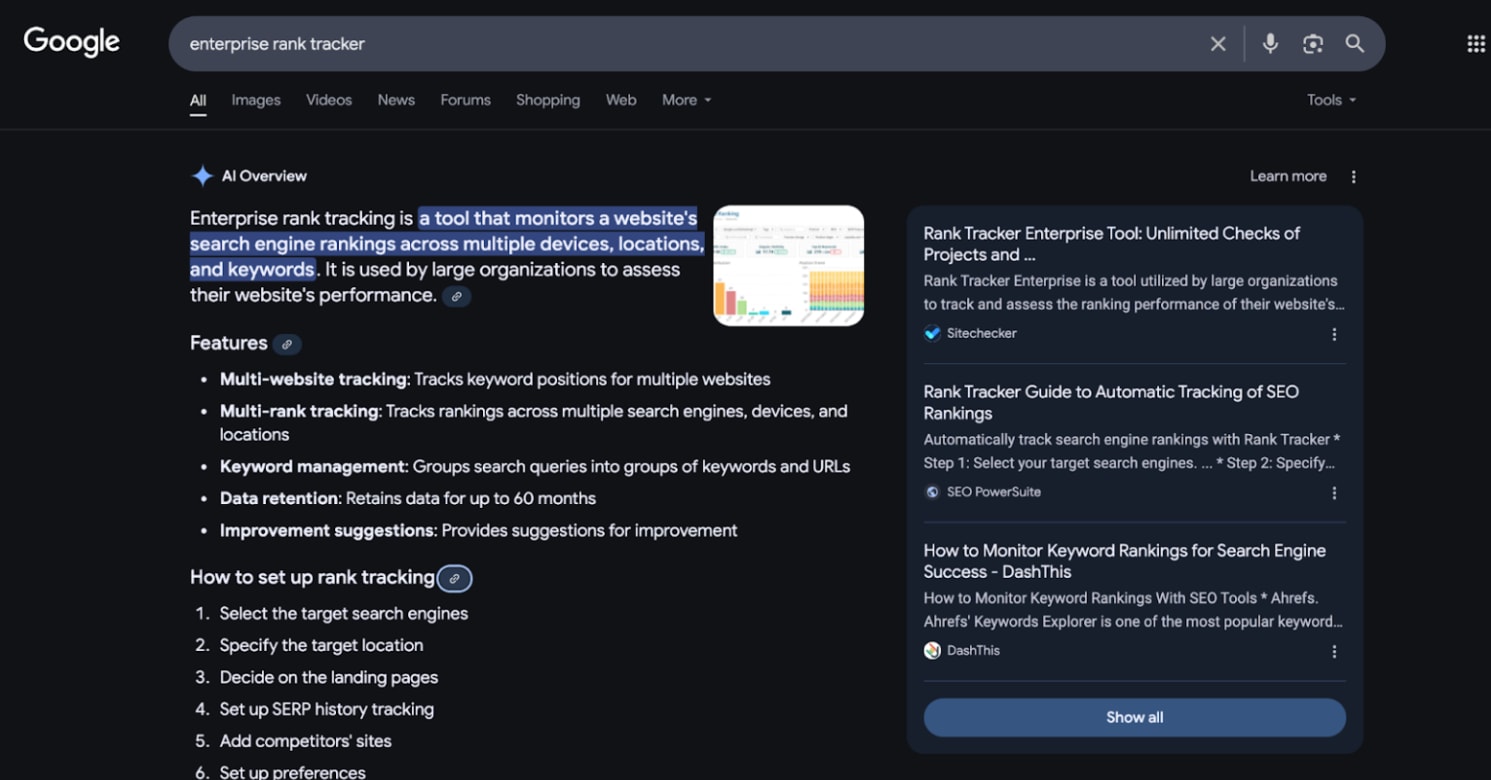
🤖 AI Overviews appear in 48% of searches and reduce CTR by 61%; searches with AI Mode have 93% zero-clicks (Semrush/Seer 2026)
🚨 B2B sites lost an average of 34% of traffic in 2024–2025; some niches lost up to 70% (Onely/BrightEdge)
✅ A solution exists: brands cited in AI Overviews receive 35% more organic clicks and 91% more paid clicks compared to un-cited competitors (Seer Interactive, 2026)
🎯 You will get: up-to-date statistics, a comparison of AI Overviews vs. AI Mode, survival strategies, and step-by-step actions for 2026
🚨 In the first half of 2026, Google definitively transformed into a "walled garden": 68% of searches conclude directly on the results page. In two years, the share of zero-clicks has grown from 60.45% (2024) to 68.01% — the fastest acceleration in a decade. The main catalyst is the large-scale rollout of AI Overviews and the emergence of AI Mode. But there's a counter-intuitive fact: brands cited within AI answers *win*.
📊 2026 Zero-Click Statistics: New Records
Data from several independent studies paint a consistent picture — and it's worse than most predicted a year ago.
Key 2026 Figures
Metric
Value
Source
Compared to 2024
Zero-click search share (overall)
68.01%
SparkToro/Similarweb, April 2026
↑ from 60.45% (+7.5 p.p.)
Zero-click on mobile devices
77.2%
Similarweb 2026
↑ (mobile consistently higher)
Zero-click on desktop
46.5%
Similarweb 2026
↑ but significantly lower
Traffic share decrease to websites (YoY)
−22%
SparkToro, 2026
Fastest drop in a decade
CTR drop with AI Overview present
−61%
Seer Interactive, 2.43 billion impressions
↑ from −34% in 2024
Click within AI Overview
only 1%
Pew Research, 68,000 real searches
New data 2026
Zero-click in searches with AI Mode
93%
Semrush, 2025–2026
New format — worse than AIO
💡 Important nuance: even with zero clicks, only 26% of users completely abandon their session after an AI Overview (Pew Research). 74% continue — either by refining their Google query or opening other tabs. This means your content's influence on user decisions persists even without a click.
Zero-Click Dynamics Over the Years
Year
Zero-click % (USA)
AI Overviews Coverage
CTR Drop with AIO
2019
~50%
—
—
2022
~60%
—
−25–30% (snippets)
2024
60.45%
13–34%
−34%
2026 (Q1–Q2)
68.01%
48%
−61%
🤖 AI Overviews vs. AI Mode: What's the Difference and Who's More Dangerous
In 2026, Google launched two parallel AI formats, and their impact on traffic is fundamentally different.
AI Overviews (AIO)
A brief AI-generated answer above traditional search results. They are automatically triggered for 48% of all queries (BrightEdge, February 2026) — a 58% increase compared to a year ago. Characteristics:
Zero-click rate: 83% (searches with AIO vs. ~60% without AIO)
Only 8% of visits from AIO result in a click on an organic result (Pew Research, 68,000 searches)
81% of AI Overview searches occur on mobile (SeoProfy)
Informational queries ("how to do X") — AI Overview in 99.9% of cases (Ahrefs, December 2025)
E-commerce queries — only 3.2% (Google rolled back AIO for shopping queries as they weren't converting)
AI Mode
A new, fully conversational search interface without traditional "blue links." It surpassed 1 billion monthly users according to Google I/O 2026 data. Characteristics:
Zero-click rate: 93% — significantly worse than standard AIO
Exceeded 100 million monthly active users in the US and India by Q1 2026
Query volume more than doubles quarterly
B2B technology queries trigger AIO in 82% of cases (BrightEdge, February 2026) — a year ago it was 36%
Characteristic
AI Overviews (AIO)
AI Mode
Zero-click rate
83%
93%
Presence of traditional results
✅ Yes, below AIO
❌ No — fully conversational
Query coverage
48% of all queries
Growing, focus on informational
Ads within
25.5% of AIOs include ads (+35% CPC)
Being tested
Danger to content sites
⚠️ High
🚨 Critical
⚠️ Important about opt-out: it's technically possible to remove your content from AI Overviews using the nosnippet tag. However, this also removes you from featured snippets and rich results — further reducing overall visibility. For most publishers, opting out worsens the situation rather than improving it. More details on this can be found in our article about the Generative AI tab in GSC 2026.
📉 Who Suffered the Most: A Niche Breakdown
The impact of AI Overviews is not uniform. The difference between niches is colossal, and this dictates which strategy to choose.
Niche
AIO Frequency
Estimated CTR Drop
Threat Level
Health and Medicine
43%
−40–65%
🚨 Critical
Technology and IT (B2B)
82% (BrightEdge 2026)
−30–61%
🚨 Critical
Education and Tutorials
~99.9% of info queries
−44–70%
🚨 Critical
SEO and Digital Marketing
High
−34–55%
⚠️ High
Finance and Insurance
Medium
−18–35%
⚠️ Medium
E-commerce / Shopping
3.2% (Google rolled back)
−8–18%
✅ Low
Local Business
~7% of local queries
Minimal
✅ Low
Branded Queries
Low
Minimal — even +35%
✅ Safe
For webscraft.org, as a technical blog, the situation is ambiguous: most of the content consists of informational articles that are most likely to be covered by AIO. But there's also a plus: the niche "AI tools for Ukrainian developers" has low competition in the Ukrainian segment, which provides an opportunity to become the primary source in AI answers.
✅ The Citation Paradox: Why Being in AI Overviews is Beneficial
Here begins the most crucial part of the article – what most authors miss or misunderstand.
A study by Seer Interactive (April 2026, analyzing 53 brands, 5.47 million tracked queries, 2.43 billion organic impressions) recorded a clear effect:
📊 Brands cited within AI Overviews receive:
— 35% more organic clicks
— 91% more paid clicks
— A 40% higher paid CTR (15.74% vs 11.19%)
compared to brands ranking #1 but without citation in AIO.
The mechanism is simple: a user sees your brand in an AI response, builds trust – and then searches for you directly or clicks on your ads with higher conversion. Visibility → Trust → Conversion without a direct click to the article.
Additionally: CTR on AIO queries has partially recovered – from 1.3% (December 2025) to 2.4% (February 2026). This isn't a return to old figures, but stabilization at a new, lower level. The worst is over – if you adapt.
Conclusion: The right strategy in 2026 is not to fight AI Overviews, but to become their source. Then, zero-click turns into free brand advertising.
🛠️ Survival Strategies in the Zero-Click Era of 2026
Strategy 1: Become a Source for AI Citations (AEO + GEO)
The main change in 2026: the goal is no longer "to rank #1," but "to become a source that AI cites." These are different goals and different tactics.
What's needed for citation in AI Overviews:
Answer-First Structure: The first 2–4 sentences of an article should be a direct, concise answer to the query. This is the snippet AI picks first.
Self-Contained Sections of 75–225 Words: Each section between H2 and H3 should fully answer one specific question – without linking to other parts of the article.
H2 and H3 = Searcher Questions: Google literally copies your subheadings into the AI response if they match the query.
Specific Data with Sources and Dates: "68.01% of queries, SparkToro, April 2026" gets cited; "most queries" never does.
Schema FAQPage + HowTo: The most powerful technical signal for AIO and Gemini.
Strategy 2: Reorientation to Transactional Content
E-commerce and shopping queries have only 3.2% AI Overview coverage – Google rolled back AIO for them because AI answers didn't convert into sales. This means:
Comparative product pages ("X vs Y," "Best X for Y")
Pricing and tariff pages
Case studies and demo queries
Bottom-of-funnel content ("buy X Ukraine," "order X with delivery")
For B2B blogs: shift from "how to do X" to "our case study of implementing X for a client in the Y niche" – AI cannot synthesize this content because it lacks your unique experience.
Strategy 3: Brand SEO and Direct Traffic
Branded queries are barely affected by AIO – and are even boosted if your brand is cited in AI responses for non-branded queries. Tactics:
Publish unique data, research, and case studies that media and Reddit cite – this builds brand recognition regardless of clicks.
Email newsletters: a direct channel, independent of Google. According to Coupler.io, email provides +40% direct traffic for publishers actively growing their list.
Guest posts on authoritative sites and Reddit (58% of sources for LLMs are Reddit, Quora, forums).
Strategy 4: Video and Multimedia
Google cannot "steal" video content through AI Overviews. YouTube Shorts and video guides are a separate surface that doesn't compete with AIO. According to WPBeginner, YouTube Shorts provided +300% traffic for content sites that transitioned to video in 2025–2026. An additional advantage: video content increases chances of being cited in Gemini (which considers YouTube).
Strategy 5: Diversification – GEO for AI Search Engines
Google is no longer the sole source of search traffic. ChatGPT Search, Perplexity, and Grok send referral traffic that converts 4.4–5 times better than standard organic traffic (Semrush/Adobe 2026). Fewer visits – higher ROI from each. How to optimize for these platforms is in our full GEO guide.
🔬 My Experience: What Actually Worked on webscraft.org
Keyword Audit (My First Step)
When I saw that traffic to informational articles had dropped by 30–40%, I conducted an audit in GSC: I compared impressions vs. clicks over the last 16 months. The picture was typical: impressions remained the same or even increased, while clicks dropped. This is a classic sign of AIO interception – Google shows your content in its AI response but doesn't send users to you.
The solution: rewrite 12 key pages with an Answer-First structure and specific data. Of the 12 rewritten pages, 9 began to be regularly cited in AI Overviews within 7–21 days – and for them, CTR stabilized or even increased.
ChatGPT-User Crawler as a Signal
Since March 2026, I've been recording ~3,920 requests per day from ChatGPT-User in server logs. This means ChatGPT is actively scanning the site for real-time user responses. In parallel with the increase in scanning, referral traffic from ChatGPT has also grown – still small in volume, but with a conversion rate 3–4 times higher than regular organic traffic from Google.
AI Overviews take short answers – those that fit into 2–4 sentences. But a full case study with real client data, analytics screenshots, and practical nuances – that's what AI cannot synthesize. This is the content that retains clicks and simultaneously becomes a source for AI citations.
📈 New Metrics of Success in 2026
Measuring only organic clicks in 2026 is like evaluating TV advertising solely by direct sales at the moment of broadcast. The picture is incomplete.
Old Metric
New Metric 2026
Where to Track
Organic clicks
AI Overview impression share
GSC → Generative AI tab
SERP position
Frequency of citation in AI responses
Otterly.ai, Promptmonitor, Profound
Traffic from Google
AI referral traffic (ChatGPT, Perplexity)
GA4 → Traffic source → chatgpt.com
CTR
Share of voice in AI responses
LLMrefs, ZipTie.dev
Keyword ranking
Assisted conversions from AI sources
GA4 + UTM for AI referrals
Number of visits
Branded search volume (trust indicator)
GSC → Branded queries
According to Goodfirms (2026), only 14% of marketers currently measure AI Overview impression share and citation frequency – even though these are the most important search surfaces. This means 86% of competitors are "flying blind."
🛠️ Free Starter Kit for Monitoring
Google Search Console → Generative AI: Data from May 18, 2025 – shows which queries your site appears for in Gemini/AI Overviews.
Manual Test Every Monday: 3–5 key queries in ChatGPT Search, Gemini, Perplexity – record results in Google Sheets.
GA4 → Acquisition → Session source: Look for chatgpt.com, perplexity.ai, gemini.google.com as referrers.
Server access logs: Filter by GPTBot, ChatGPT-User, PerplexityBot – an increase in scanning frequency precedes citation by 2–4 weeks.
❓ Frequently Asked Questions (FAQ)
Will zero clicks really kill all my Google traffic?
No, not all of it — but the traffic structure is fundamentally changing. Informational queries ("how," "what is," "why") are suffering the most, with up to 99.9% of them now triggering AI Overviews. Transactional queries ("buy," "order," "price X," "best X for Y"), on the other hand, are barely affected — AIO appears in only 3.2% of shopping queries. Local businesses are also safe (~7% AIO for local intent). The strategy: reorient towards content closer to conversion and simultaneously optimize for AIO citation.
How do I know if my pages are already being intercepted by AI Overview?
Three steps: (1) GSC → Performance → compare impressions and clicks over the last 16 months — if impressions are stable or growing, and clicks are falling, this is a classic sign of AIO interception. (2) GSC → Generative AI tab — shows specific queries where your content is used in AI Overviews. (3) Semrush or Ahrefs → Position Tracking → filter by "Has AI Overview" — 10 minutes, and you have a complete picture of your keywords.
Should I block Google from using my content in AI Overviews?
For most sites — no. The nosnippet tag removes you from featured snippets, rich results, and AIO simultaneously, leading to an even greater overall visibility drop. The exception: if you have a niche business where every click is critical and citation without a click offers no value (e.g., paid subscription content). In all other cases, it's better to become a source for citation — this provides +35% organic and +91% paid clicks, according to Seer Interactive.
Are long articles of 3000+ words still relevant in 2026?
Yes, but only with the right focus. AI Overviews take short answers to simple questions. However, a detailed case study with real client numbers, a comparison of tools based on personal experience, practical mistakes, and solutions — AI cannot synthesize this. Such content retains clicks (as it doesn't compete with AIO) and also becomes a source for AI citations due to unique data. The formula: long article = unique personal experience + specific numbers + structure for AIO extraction.
What percentage of traffic from AI search engines actually converts?
Significantly better than from traditional organic search. According to Semrush and Adobe (2026), AI-referred traffic converts 4.4–5 times better than standard organic traffic. A user who clicked a link from a Perplexity or ChatGPT answer is already "warm" — they have passed through AI filtering and specifically chose you. While the number of such transitions is still small, the ROI is higher.
Do I need to optimize separately for Gemini, ChatGPT, and Perplexity?
Basic optimization (structure, E-E-A-T, freshness, specific data) covers all three platforms. However, there are nuances: for ChatGPT, the Bing index is critically important (87% of citations are from Bing's top results); for Google AI Overviews, Schema markup and current Google organic ranking are key; for Perplexity, maximum date freshness and a clear structure are essential. For details on each platform, see our GEO guide 2026.
✅ Conclusions and Action Plan
In the first half of 2026, the zero-click era became an undeniable reality: 68% of queries with no click, 83% of zero clicks with AI Overviews, 93% in AI Mode. This is not a crisis that will pass — it's a new baseline.
But the main conclusion is not pessimistic: brands that have become sources for AI Overviews are winning more than they are losing. +35% organic clicks, +91% paid clicks, and a 4.4x higher conversion rate from AI referrals are real numbers, not predictions.
The paradigm shift is simple: previously, you optimized so that Google would send people to you. Now, it's about Google citing you in its answers. Different goals, different tactics, but still SEO.
Action Plan for the next 30 days:
Open GSC → Generative AI tab — check your current AI visibility
Find 5 articles with stable impressions but falling clicks — they are under AIO interception
Rewrite the first 2–4 sentences of each → a direct answer to the main query
Add one comparison table with specific numbers and dates
Implement FAQPage Schema on at least 3 key pages
Every Monday: a 5-minute test in ChatGPT, Gemini, Perplexity — record who is being cited
This article was prepared by the founder and leader of a company with 8 years of web development experience — Vadim Kharovyyuk.