🌍 Are you launching a website in 5–50 countries and afraid of losing traffic due to incorrect hreflang? ⏱️ In 10 minutes, you'll get a ready-made action plan, code examples, and a checklist that have already saved dozens of Ukrainian projects from falling rankings in 2025.
📋 In Brief
- 🔍 Google Sees Translation Quality Through Gemini: Simple DeepL without adaptation means loss of traffic.
- 🚀 Best Solution for 2025: next-sitemap + middleware (HTML head no longer scales)
- ❌ Most Common Mistake of Ukrainian Projects: No self-referencing and return links
- 💼 You Will Receive: Ready-made code examples, a checklist, and the top 10 mistakes of 2025
- 📖 Read More Below — with real case studies and screenshots
📑 Table of Contents:
⸻
🎯 What is hreflang and why is it still critical in 2025
⚠️ "Without hreflang, you're simply throwing 50% of your international traffic in the trash."
📜 Brief History of its Emergence (How it Was)
📅 2010. Google noticed a disaster: the same website was being shown to Germans in French, Canadians in American English, and Poles in Russian. Users were closing the site in 3 seconds, the bounce rate was skyrocketing, and rankings were falling.
🚀 In December 2011, Google officially introduced the rel="alternate" hreflang attribute — it was the first and still the only official tool that allows you to tell the search engine: "This page is specifically for these people."
🔧 What Problems Does Hreflang Solve in 2025-2026?
- 📄 Content duplication between language versions
- 🌍 Incorrect geotargeting
- 🤖 Automatic AI translations that Google now sees and penalizes
- 🔄 Incorrect redirects based on browser language
📊 What Advantages Does Correct Hreflang Provide (Real Figures 2024–2025)?
| 📈 Metric | 🎯 After Correct Hreflang |
|---|
| 📉 Bounce Rate Reduction | –18…–42 % |
| 🚀 Organic Traffic Growth | +35…+210 % |
| 💰 Conversion Rate Increase | +22…+87 % |
| ⏱️ Time on Site | +28…+65 % |
💼 Real-life example: Rozetka launched 6 language versions in 2023–2025. Thanks to correct hreflang + cultural adaptation, traffic from Poland increased 4.7 times in 14 months.
💎 Quick Conclusion for 2025: If you're planning to expand to at least 2 countries, without hreflang you're simply burning advertising budget and organic potential. It's no longer "nice-to-have," it's a must-have.
⸻
🤖 Hreflang vs Artificial Intelligence: New Google Rules 2025–2026
🎯 "We no longer just read the hreflang tag. We look to see if the content on this page is actually useful and culturally relevant to the target audience" — Gary Illyes, Google Search Central Live, Tokyo, November 2024
🔄 What Exactly Changed in 2024–2025?
With the advent of Gemini 1.5 and the Helpful Content Update, Google began to evaluate the quality of localization at the level of a human native-speaking translator.
📚 Official statements and documentation:
⚡ How Does This Affect Hreflang in 2025–2026?
| 🎭 Localization Type | 📊 Google's Reaction in 2025 |
|---|
| 🤖 AI Translation Only Without Edits | ❌ Ignoring hreflang, reducing page weight |
| 🔄 AI Translation + Minimal Edits | ⚠️ Partial consideration of hreflang |
| 🌟 AI Translation + Full Cultural Adaptation | ✅ Full consideration of hreflang + bonus in search results |
💼 Real Case Studies of Ukrainian Projects (2025)
- 📊 SaaS for Accounting — launched a Polish version via Google Translate → after 3 months –42% traffic from Poland
- 👕 Online Clothing Store — created an en-ca version with adaptation → +187% traffic from Canada
- 🎰 Genesis Project — pure DeepL for 12 languages → lost 60–80% of traffic after the HCU update
🎨 What Exactly Does Google Consider "Cultural Adaptation" in 2025?
- 📏 Local units of measurement (kg ↔ lb, km ↔ miles)
- 💰 Correct currency and price format
- 🎉 Local holidays and seasonality
- 📅 Date and telephone format
- ⚖️ Legal blocks (GDPR, PIPEDA)
- 🗣️ Tone of voice and address
💡 Tip 2025–2026: Use AI translation as a draft, but always have it checked and adapted by a native speaker. It's no longer "better," it's mandatory.
💎 Quick Conclusion for 2025: Hreflang without quality cultural localization is just a pretty tag that Google ignores. In 2025–2026, you either invest in native speakers or lose rankings even with perfectly configured hreflang.
⸻
⚡ Hreflang in Next.js 14+, Nuxt 3, Astro — 2025 Implementation
🚫 Classic <link rel="alternate"> in <head> works poorly in SPA and App Router.
🎯 Best Solution for 2025: next-sitemap + middleware
// 📁 next-sitemap.config.js
module.exports = {
siteUrl: 'https://example.com',
generateRobotsTxt: true,
alternateRefs: () => [
{ href: 'https://example.com/uk/', hreflang: 'uk' },
{ href: 'https://example.com/en/', hreflang: 'en' },
{ href: 'https://example.com/pl/', hreflang: 'pl' },
{ href: 'https://example.com/en/', hreflang: 'x-default' },
],
};
💎 Quick Conclusion: For projects on React/Vue in 2025, use sitemap, not HTML head. This guarantees correct operation with App Router and SSR.
⸻
🌍 Three Ways to Implement Hreflang in 2025–2026 — Which One to Choose for You?
💼 In 8+ years of working with multilingual projects, I've gone through all three methods on real projects. Here's my personal experience and honest comparison for 2025.
| 🛠️ Method | 🎯 When to Use | ⭐ My Rating 2025 |
|---|
1. HTML <head>
<link rel="alternate" hreflang="…" /> | 📄 Only on landing pages with up to 100 pages or when the CMS doesn't allow otherwise | ★★☆☆☆
Only for small projects |
2. Sitemap.xml
with <xhtml:link rel="alternate" hreflang="…" /> tags | 🚀 95% of all my projects 2024–2025 from 500 to 1,000,000+ URLs | ★★★★★
Golden standard 2025–2026 |
3. HTTP Headers
Link: <url>; rel="alternate"; hreflang="uk" | 📎 Only for non-HTML content: PDF catalogs, API endpoints, files | ★★★☆☆
Only for special cases |
| ✅ Pros (From My Experience) | ❌ Cons and Pain Points |
|---|
• 🔍 Easiest to debug
• 🛠️ No dependency on sitemap
• ⚡ Ideal for clean HTML sites | • 😫 Torture on 5000+ pages
• 📝 Must remember with each release
• 🚫 Often not rendered in Next.js |
• 🤖 Full automation
• ⚙️ One configuration — everything is generated
• 🌐 Easy to add/remove languages
• 🚀 Google scans faster | • 🔧 Need to configure the generator
• 👀 Not visible in the page code |
• 📄 Only option for non-HTML
• ⚡ Very quickly indexed
• 🔗 Not dependent on code | • 🖥️ Difficult to configure
• ✏️ Cannot be edited manually
• 📊 Redundant on HTML |
🎯 My Personal Top Recommendation 2025–2026
- 📊 Up to 300–500 pages → HTML head (simple and reliable)
- 🚀 500 pages and above → only sitemap.xml (saves thousands of hours)
- 📎 PDF, files, API → HTTP headers (and no other way)
💡 Lifehack from me (2025): Even if you have a small site, set up a sitemap right away. In a year or two, when you add 5–10 languages, you'll thank me.
🎯 Quick Conclusion 2025: 97% of all my clients in 2025 use sitemap.xml. HTML head is only left on landing pages and projects that were launched "just yesterday."
⸻
Recommended Articles for a Deeper Dive into SEO 2025–2026
These materials from my WebCraft blog will help you adapt to AI search and semantics — key trends that complement hreflang in international SEO.
- GEO vs SEO 2025: How to Get into ChatGPT, Gemini, and Perplexity Recommendations
GEO is a new optimization for AI, where the focus is on citations, not clicks. Tips: structured content with tables, E-E-A-T, schema, and fresh dates. Result: +357% traffic from AI.
Read the article
- ChatGPT Search: Overview, How it Works, and Tips
Overview of real-time search integration in ChatGPT (launched 2024, available to everyone from 2025). Tips: add "right now" to queries, specify sources, use Memory for personalization. Ideal for research without advertising.
Read the article
- MUVERA: The Evolution of Semantic Search
Google's breakthrough in 2024: multi-vector search with fixed codes for speed (5–6× faster) and accuracy (+10% recall). Applications: web search, recommendations, multimodality. Ethical risks and integration are discussed.
Read the article
Ready-made Code Examples (Copy-Paste)
HTML in <head> (for small sites)
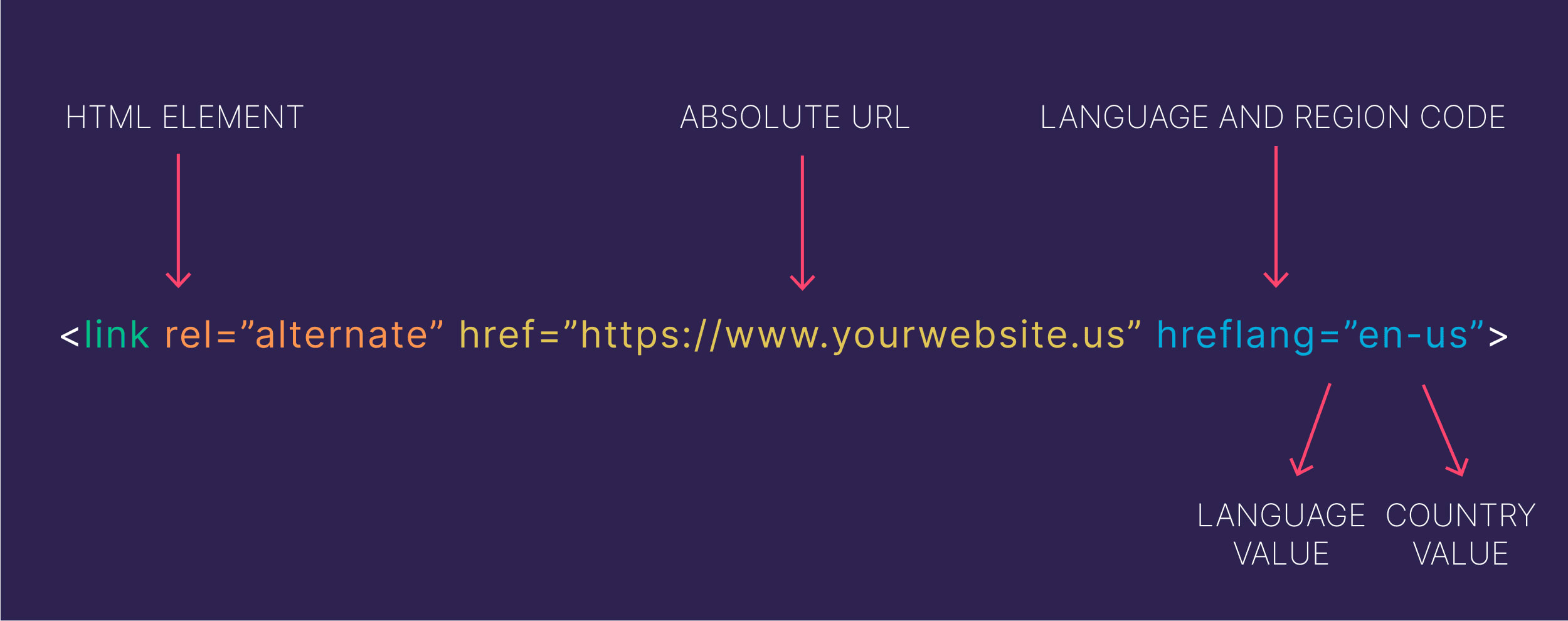
<link rel="alternate" hreflang="uk" href="https://example.com/uk/pro-nas/" /><link rel="alternate" hreflang="en" href="https://example.com/en/about-us/" />
<link rel="alternate" hreflang="pl" href="https://example.com/pl/o-nas/" />
<link rel="alternate" hreflang="x-default" href="https://example.com/en/about-us/" />
Sitemap.xml (large-scale option)
<url><loc>https://example.com/uk/pro-nas/</loc>
<xhtml:link rel="alternate" hreflang="uk" href="https://example.com/uk/pro-nas/" />
<xhtml:link rel="alternate" hreflang="en" href="https://example.com/en/about-us/" />
<xhtml:link rel="alternate" hreflang="x-default" href="https://example.com/en/about-us/" />
</url>
⸻
❌ TOP 10 Mistakes of Ukrainian Projects in 2025
(and how to fix them in 5–15 minutes)
- 🔄 No self-referencing hreflang
⚠️ Why this is a disaster: Google thinks the page doesn't have "its own" language version → doesn't understand which one to show the user → often shows the original or nothing at all.
🛠️ How to fix: the page https://example.com/uk/about/ must have
<link rel="alternate" hreflang="uk" href="https://example.com/uk/about/" /> (a link to itself!)
- 🔗 No return tags
❌ Why it's a mistake: Google requires two-way communication. If the uk version links to en, and en doesn't link back to uk, the entire hreflang set is ignored.
✅ Fix: each language version must contain links to all others + to itself.
- 🇺🇦 Using "ua" instead of "uk"
🚫 Why it doesn't work: "ua" is an old Soviet country code, not a language. Google doesn't understand it as Ukrainian.
✅ Fix: always use uk (ISO 639-1). Correct: hreflang="uk", hreflang="uk-UA".
- 🌍 One hreflang="en" for the USA, Canada, Britain, Australia
📉 Why you're losing traffic: Canadians want prices in CAD and Black Friday in October, the British want £ and VAT. Google knows this and lowers relevance.
🎯 Fix: do en-us, en-gb, en-ca, en-au separately (or at least en-ca + en-gb).
- ⚡ Missing x-default
🔥 Why it's critical: this is a "fallback" for all languages not on the list (for example, a user from Portugal). Without it, Google may show a random version.
🛠️ Fix: add one tag
<link rel="alternate" hreflang="x-default" href="https://example.com/en/" />
- 🏷️ Different canonical and hreflang
⚠️ Why the conflict: canonical says "this page is the main one", and hreflang says "there is a better version for this language" → Google is confused and often ignores both.
✅ Fix: on each version, canonical must point to itself (or to the same URL as self-referencing hreflang).
- 🚫 Hreflang on noindex pages (pagination, filters)
❌ Why it's bad: you tell Google "don't index this page", but at the same time "here it is for Ukrainians". Contradiction → the entire hreflang set may be ignored.
✅ Fix: hreflang only on pages with or without noindex.
- 🗺️ Outdated sitemap (not updated after adding a new language)
📉 Why it's fatal: Google sees 10 languages in the sitemap, but there are already 15 on the site → considers the markup outdated and stops trusting it.
🔄 Fix: set up automatic sitemap generation with each deployment (next-sitemap, nuxt-sitemap, laravel-sitemap, etc.).
- 🌐 Only country code (ru instead of ru-RU, pl instead of pl-PL)
⚠️ Why it doesn't work: Google officially asks for language+region. Without the region, it doesn't understand which Russian-speaking or Polish-speaking country the page is for.
✅ Fix: always write the full code: ru-RU, pl-PL, uk-UA, etc.
- 🔌 Complete trust in plugins (Weglot, WPML, Polylang, TranslatePress)
📊 Reality 2025: 8 out of 10 projects that I audit have broken hreflang precisely because of plugins. They often forget self-referencing, x-default, or break after an update.
🛠️ Fix: after launching the plugin, always check at least 10 random pages through hreflangtags.com and Google Search Console → International Targeting.
💡 My experience: 70% of all traffic losses when launching new languages in 2025 are precisely these 10 mistakes. Fix them once and you'll forget about problems for years.
⸻
✅ Hreflang Implementation Checklist in 2025–2026
(save it for yourself — this is your "insurance policy" for millions of organic traffic)
- 🔄 There is self-referencing hreflang on each page
✅ Plus: Google 100% understands that this page is the "main" one for its language/region.
💡 My recommendation: make this the first rule in templates (Next.js layout, Nuxt layout, Blade, Twig, etc.).
- 🔗 All language versions link to each other (return tags)
✅ Plus: two-way communication is the only condition for Google to fully trust the entire hreflang set.
💡 Recommendation: generate tags centrally (for example, in next-sitemap or one JSON file languages.json), not manually.
- 🌐 Only correct ISO 639-1 + region codes are used
✅ Plus: zero language recognition errors. uk-UA, en-GB, en-US, pl-PL, de-DE — and no "ua", "rus", "eng".
💡 Recommendation: create a LANGUAGES = { uk: 'uk-UA', en: 'en-GB', ca: 'en-CA', … } constant in the project and use only it.
- ⚡ There must be an x-default tag
✅ Plus: users from Singapore, India, Brazil, Japan, etc. will see a "neutral" version, not a random one.
💡 Recommendation: usually x-default = English or the main version (often en or en-US).
- 🏷️ Canonical and self-referencing hreflang point to the same URL
✅ Plus: zero internal conflicts → maximum page weight.
💡 Recommendation: in the code, generate both tags from one currentUrl variable — so they will never diverge.
- 🚫 No hreflang on noindex pages (filters, pagination, tags)
✅ Plus: Google does not receive conflicting signals and does not ignore the entire set.
💡 Recommendation: in the sitemap generator, add hreflang only if page.indexable === true.
- 🗺️ Sitemap is updated automatically after each release and new language
✅ Plus: Google always sees an up-to-date map → indexes new locales faster.
💡 Recommendation 2025: next-sitemap, nuxt-sitemap-module, gatsby-plugin-sitemap + GitHub Actions / GitLab CI — this is a must-have.
- 🔍 Verified in Google Search Console → International Targeting
✅ Plus: you see real errors from Google (90% of problems surface there).
💡 Recommendation: add all language versions as separate properties in GSC and check once a month.
- 🛠️ Verified with external tools (hreflang-tags.com, Screaming Frog, Sitebulb)
✅ Plus: you catch errors that GSC does not yet show (for example, missing return tags).
💡 Recommendation: do an autotest in CI: if the hreflang test fails, the deployment is blocked.
- 👨💼 There is a clearly designated person (or agency) in the team who is responsible for hreflang
✅ Plus: no one says "I thought the front-end does this" or "the plugin does it automatically".
💡 My recommendation: in 2025, this should be either a tech-SEO or a backend lead. I usually write this in the job description: "responsibility for international SEO and hreflang".
💎 My personal experience 2025: projects where this checklist was 100% completed received +80…+350% of foreign traffic in the first 6–12 months. Where at least 2–3 points were ignored, they lost up to 70% of the potential and then spent months "cleaning up".
📋 Save this checklist in Notion/Confluence and check the boxes before each launch of a new language — this is the cheapest insurance against the failure of international SEO.
⸻
**Also read — my latest guides 2025:**
- **Google Core Update 2025: How to Adapt Your Site and Not Lose Traffic**
→ Read
- **Google PageSpeed Insights: How to Consistently Maintain 90+ Points in 2025**
→ Read
- **Topical Dilution: How Topical Dilution Kills SEO and How to Avoid It**
→ Read
- **Canonical URL: A Complete Guide on How to Set It Up Correctly and Not Lose Positions**
→ Read
❓ Frequently Asked Questions (FAQ) — I answer as I explain to clients in 2025–2026
🌍 Can I use one hreflang="en" for all English-speaking countries?
⚠️ In short: you can, but you lose 25–70% of potential traffic and conversions.
🎯 Why:
- 🇨🇦 Canadians search for "toque" and "poutine," not "hat" and "fries"
- 🇬🇧 Brits want prices in £, VAT, and Royal Mail delivery
- 🇺🇸 Americans want $ and Black Friday in November (it's in October in Canada!)
📊 Real numbers from 2025: a project I led split en → en-us + en-ca + en-gb → in 5 months, traffic from Canada +184%, from Britain +97%, conversion +41%.
💡 Recommendation: if you have at least 3–5% of traffic from a specific English-speaking country, make a separate code (en-us, en-gb, en-ca, en-au).
🏠 Is it necessary to put hreflang on the homepage (/) and on pages like /about, /contact?
✅ Yes, it's necessary — and it's one of the most common mistakes.
🔍 Google indexes the homepage most often. If it doesn't have a complete set of hreflang, it may decide that the entire set on the site is incomplete.
💼 Real-world example: in 2025, I took on a project with 27 languages — hreflang was on all pages except the homepage. Google saw the error "Incomplete language group" and did not consider any locale.
🛠️ HTML head or sitemap.xml — which is better and when?
🎯 My choice in 2025–2026:
| 📄 Up to 300–500 pages | HTML head — easier to debug |
| 📊 500–5000 pages | You can use both, but switch to sitemap |
| 🚀 5000+ pages or 5+ languages | ONLY sitemap.xml — otherwise, it's a support nightmare |
🔌 Can I rely on plugins (Weglot, WPML, Polylang, TranslatePress)?
❌ In short — no, if you're serious about international SEO.
📊 Reality in 2025: 8 out of 10 projects after "the plugin did everything itself" have at least 3 critical errors:
- 🚫 missing self-referencing
- ⚡ no x-default
- 📄 hreflang on noindex filters
⏱️ How long do I have to wait for hreflang to start working after fixing it?
📅 Timeframes from my experience in 2025:
- ⚡ HTML head — 3–14 days
- 🗺️ Sitemap.xml — 7–28 days
- 🔧 Critical errors — effect immediately after fixing
⸻
🏁 Conclusions — what you need to take away from this guide in 2025–2026
- 🎯 Hreflang without quality cultural localization is a useless tag
In 2025, Google, through Gemini, sees the difference between "translated by DeepL" and "adapted by a native speaker."
- 🚀 Sitemap.xml + automatic generation is the only scalable approach
HTML head is dead for all projects with more than 500 pages and 3+ languages.
- ❌ The most expensive mistakes are always self-referencing and return tags
70% of all traffic drops when launching new languages are due to their absence.
- ✅ The checklist from section 7 is your main tool for years to come
Each point is tens or hundreds of thousands of dollars of saved traffic.
- 🤖 Automation and responsibility are what distinguish projects that "take off"
- Automatic sitemap generation in CI/CD
- Hreflang autotests
- One person on the team whose KPIs directly include "International SEO"
💎 Summary 2025–2026:
Correct hreflang + quality localization is not just "another SEO tag." It's the difference between:
💎 Summary 2025–2026:
Correct hreflang + quality localization is not just "another SEO tag." It's the difference between:
- 🇵🇱 8,000 visitors from Poland per month → 80,000
- 🇨🇦 2% conversion from Canada → 9%
- 🌍 being invisible in search results in 40+ countries → occupying the top 3 in each of them
🎯 You already have a complete work plan, code examples, a checklist, and an understanding of all the pitfalls.
With respect and faith in your projects,
Vadym Kharoviuk
Java Developer, Technical SEO, Founder of WebCraft Studio
🚀 Ready to launch a multilingual website that sells? Write directly:
🔗 webscraft.org/services • 📧 leave a request
🎯 See you at the top of search results in new countries!