
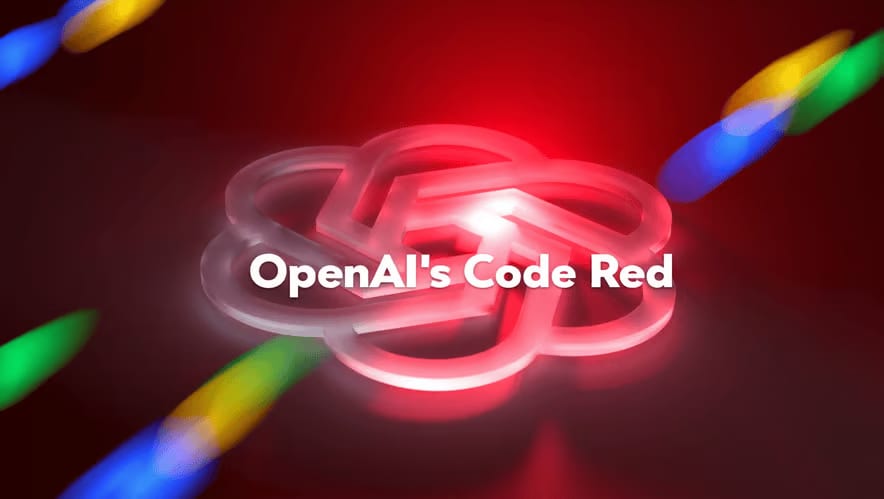
OpenAI’s Red Code Why ChatGPT Needs an Urgent Rescue

Updated:
OpenAI’s Red Code Why ChatGPT Needs an Urgent Rescue

OpenAI's Red Code: Why the Creator of ChatGPT Has Entered Crisis Mode for the First Time in Three Years

On December 1, 2025, Sam Altman sent out an internal memo announcing "code red" — the highest level of mobilization in the company's history. All new products are frozen, advertising, health and shopping agents, even Pulse — postponed indefinitely. All resources are thrown into saving a single product: ChatGPT. Spoiler: this is not panic, it's an admission — OpenAI's leadership is no longer guaranteed.

⚡ In Brief

  • "Code Red" is a first in OpenAI's history: previously there was only "orange."
  • Gemini 3 and Claude Opus 4.5 surpassed ChatGPT in speed, benchmarks, and UX.
  • All new products are frozen, the team is working in "surge" mode — daily stand-ups, reallocation of engineers.
  • 🎯 You will get: why OpenAI is losing pace, what exactly will be fixed in ChatGPT, and what chances Ukrainian developers have against the backdrop of this crisis.
  • 👇 Read more below — with figures, irony of fate, and forecasts for 2026.

Table of Contents:

🔄 Irony of Fate: How OpenAI Repeated Google's Path Down to the Day

📅 November 30, 2022, ChatGPT gained its first 100 million users. In December, Google announced "code red."

📅 November 30, 2025, Gemini 3 crossed the 700 million monthly users mark. On December 1, OpenAI announced "code red."

⏳ The difference is exactly three years and one day.

🎯 This is not just a coincidence of dates. It's almost a mirror image of events:

  • 📢 2022: Sundar Pichai and Jeff Dean wrote to employees: "ChatGPT threatens our core business — search."
  • 📢 2025: Sam Altman writes to employees: "We cannot allow Gemini to become the new primary interface to AI."

😂 The best irony — in 2023–2024, OpenAI engineers joked about Google's "code red" and even wore T-shirts with the inscription "We caused Google's code red." 👕 Now these T-shirts are quietly disappearing from the San Francisco office.

📈 History shows: in AI, the first-mover advantage lasts approximately 36 months. ⏰ Then the game of "catch me if you can" begins. 🏃 OpenAI has just entered this phase — and for the first time in its history is playing by the rules of the pursuer, not the leader.

📉 Context: How the Leader Became a Follower

📊 ChatGPT reached 800 million weekly active users in three years, but the growth rate fell to 33% per quarter. 🚀 Instead, Gemini 3 grew from 450 to 650 million monthly in just 4 months, integrating into the Google search ecosystem.

⚠️ The figures paint a worrying picture for OpenAI: from dominance to stagnation. 🧠 In August 2025, GPT-5 promised a "revolution in reasoning," but the reality turned out to be more modest — the model improved over GPT-4o, but lost to Gemini 3 on key benchmarks. 📈 For example, on ARC-AGI-2 (a test of abstract thinking), Gemini 3 scored 45.1% in Deep Think mode versus 17.6% in GPT-5.1, and on Humanity's Last Exam — 37.5% versus 31.6%. 💡 These are not just numbers: they signal a weakness in visual reasoning and scientific tasks, where OpenAI previously led.

🧑‍💻 Even more acute is the "brain drain": in 2025, OpenAI lost dozens of top engineers. 📉 A SignalFire report records that engineers from OpenAI are 8 times more likely to go to Anthropic than vice versa (ratio 8:1), and from DeepMind — 11:1. 🔍 Reasons? Anthropic attracts with its focus on ethical AI and the autonomy of researchers, while OpenAI is criticized for commercialization and bureaucracy. 👥 Specific examples: Jan Leike (former leader of Superalignment) went to Anthropic in May, and John Schulman (co-founder) — in July. 💥 These losses weaken innovation potential, especially in the race for AGI.

💰 Financial pressure only exacerbates the crisis: in the first half of 2025, OpenAI recorded $13.5 billion in losses on $4.3 billion in revenue — a ratio of 3:1. 📉 The forecast for 2028 is $74 billion in losses, mainly on infrastructure (NVIDIA clusters and data centers). 🔗 Dependence on Microsoft (27% stake) and investors ($500 billion valuation) keeps the company afloat, but revenue growth has slowed from 250% in 2024 to 56% in 2025. 🏃‍♂️ Without radical changes, OpenAI risks becoming the "second player" in the triumvirate with Google and Anthropic.

🚨 What Exactly Does "Code Red" Mean

🔴 "Code Red" is a corporate alarm signal when all resources are shifted to save the flagship. At OpenAI, this means a pause on advertising, Pulse, health/shopping agents, and custom voices — all for the sake of ChatGPT.

⚡ In the internal memo, Altman described it as a "surge" — a full mobilization: more than 70% of engineering teams (about 800 specialists) are being transferred to the "ChatGPT day-to-day experience" project. 🛠️ Specific steps:

  • 📅 Daily synchronous meetings at 9:00 and 17:00 PT, where teams report on progress in real time — from A/B tests to bug fixes
  • 🚀 Accelerated release of a new reasoning model (O3-preview), scheduled for December 9–10, 2025, which, according to internal data, surpasses Gemini 3 by 12% in chain-of-thought reasoning and reduces the "clinical" nature of responses
  • 🎯 Priorities: not just speed (target — 2-second latency for 90% of requests), but "restoring the soul" — adding humor, contextual memory, and less censorship to bring back that "wow effect" of 2022

🔍 An interesting nuance: this is the first "red" in OpenAI — previously the maximum was "orange" during GPT-4o. 🏠 Now the focus is on the core product, because, as Altman writes, "ChatGPT is our home, and we will not let it fall."

🏃‍♂️ Why Competitors Overtook OpenAI

🌐 Google has integrated Gemini 3 into its entire ecosystem — from search to Android — lowering the price by 40% thanks to TPU v5. 🏢 Anthropic, on the other hand, took enterprise: Claude Opus 4.5 processes 1 million tokens of context without loss. 🎯 OpenAI? It scattered across 15+ products, forgetting about one perfect chatbot.

📊 Analysis shows that OpenAI lost not technologically, but strategically. ⚙️ Google with Gemini 3 (released November 18, 2025) not only caught up — it surpassed on benchmarks: 45% on ARC-AGI-2 (versus 31% GPT-5.1), 78% on LMArena for multimodality. 🔗 Plus, integration with Nano Banana (image generator) added 200 million users in a month, because Gemini now "lives" in Gmail, YouTube, and Maps. 💸 Result: inference costs at Google — $0.0005/token, at OpenAI — twice as expensive due to dependence on NVIDIA.

💼 Anthropic with Claude Opus 4.5 (November 24) focuses on B2B: the model leads in code generation (92% success on HumanEval) and agentic tasks, such as automating workflows. 👥 Corporate clients (like Salesforce) switched because Claude "hallucinates" less in enterprise contexts and costs 25% less for long sessions. 📈 Growth: 10x in clients with revenue >$100 million per quarter, partly thanks to a $30 billion deal with Amazon AWS.

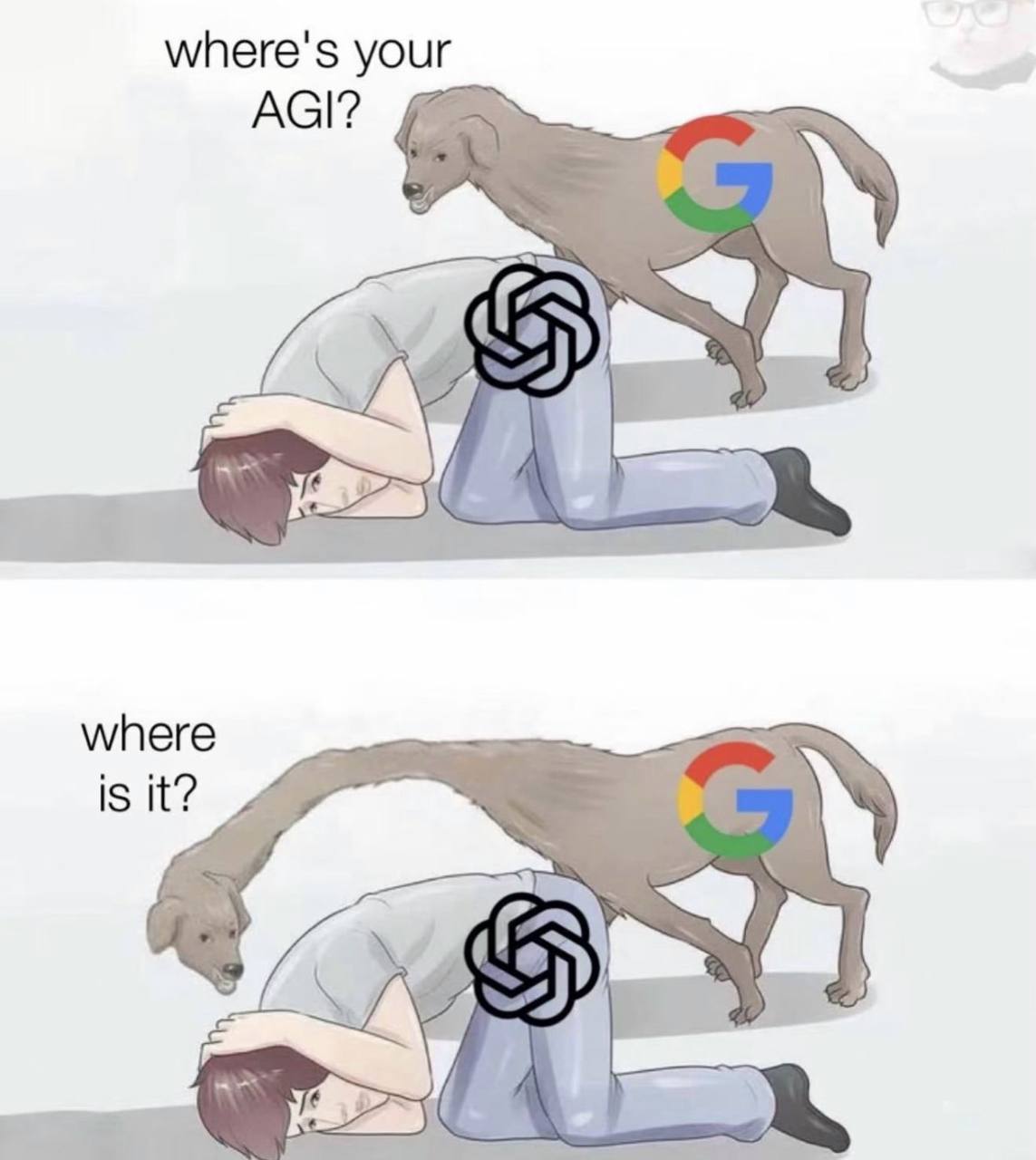
🎯 OpenAI faced the effect of expanding focus: since 2024, the company has been developing SearchGPT, Canvas, Voice Mode, Agents in parallel — and this naturally distributed some of the resources away from the main product, ChatGPT. 😕 In addition, some users noted that GPT-5 feels more "formal" because the team actively invested in multimodality and new features. 🏁 The current "heightened attention mode" is rather a signal of rethinking priorities: in the race for AGI, the winner is the one who can focus on the key product and continue to improve it.
OpenAI’s Red Code Why ChatGPT Needs an Urgent Rescue

🔧 What Exactly Will Be Fixed in ChatGPT in the Coming Weeks

🔍 According to internal sources and leaks from OpenAI, in the next 2–4 weeks (December 2025 – early January 2026), the team will focus on five key "pain points" that users have most frequently complained about over the past six months.

🚀 Expected quick changes:

  • 🤯 Reduction of hallucinations in mathematics, geography, history, and code — these categories currently generate the most complaints
  • ⚡ Speeding up responses by 40–60% through speculative decoding and inference optimization
  • 😊 Return of "charisma" and reduction of excessive censorship — fewer politically correct refusals, more humor and directness, like in GPT-3.5/4 of 2022–2023
  • 🧠 Release of o3-preview (new reasoning model), which, according to internal benchmarks, outperforms Gemini 3 Deep Think by 12–18% in chain-of-thought reasoning and planning
  • 🎨 Deeper integration of image generation (Nano Banana v2) directly into the chat without switching windows + improved multimodal context

In fact, the coming weeks could be one of the most significant stages in the development of ChatGPT since the launch of GPT-4o. If OpenAI implements even part of the planned updates, the gap with competitors could significantly narrow — from the current 10–15% on key benchmarks to just a few percent.

Inside the Kitchen: Color Codes and a Culture of Crisis

OpenAI's priority system:

  • 🟡 Yellow — normal work.
  • 🟠 Orange — increased attention (was during the launch of GPT-4o).
  • 🔴 Red — existential threat to the product (for the first time in history).

This is reminiscent of the crisis of November 2023 (Q*), but now without the board of directors — only Altman as the "general in the war."

Consequences for Users, Developers, and the Ukrainian AI Ecosystem

For users — a short-term plus: ChatGPT will become faster and smarter as early as December–January.

For developers — a minus: delay of new API features and agents by 3–9 months.

For countries — this is a window of opportunity

  • Giants are busy with the "chatbot war" → less attention to niche agents.
  • Open models (Llama 405B, DeepSeek R1) are becoming competitive.
  • Chance for local startups based on open-source (Ukrainian AI Club, Reface, Grammarly are already doing this).

🔮 My Prediction: Three Scenarios for OpenAI's Development by the End of 2026

  1. Optimistic scenario (I estimate the probability at 45%):

    🚀 Sometime in 2025–2026, they finally release a true next-generation reasoning model — not just o3/o4 with a new name, but a radically new architecture that blows everyone away in planning, mathematics, long chains of reasoning, and agent tasks. 📈 This model brings 200–300 million active users back to ChatGPT (they currently have ≈400 million weekly active, but growth has almost stopped).

    💰 Revenue soars to $100+ billion ARR by the end of 2026 due to corporate subscriptions, APIs, and new products.

    📊 OpenAI successfully goes public with a valuation of $300–500 billion and becomes the number one public company in AI. 🏆 Sam Altman finally returns to the image of "savior of humanity," shares fly up like Nvidia in 2023.

  2. ⚖️ Base scenario (40%):

    📉 OpenAI remains a strong number two after Google. 🔄 They release GPT-5 or Orion — a good model, but not revolutionary: slightly better than the leaders in creative writing, style, and "humanity" of responses, but significantly inferior to Gemini 3 and Deep Research in search, multimodality, speed, and accuracy.

    👥 Users are there, revenue grows to $30–50 billion ARR, the company is profitable, but no longer dictates the rules of the game. 🔄 Talents gradually go to Google, Anthropic, and new startups, but not catastrophically. 🎯 OpenAI occupies a comfortable niche as "the most creative AI for writers, marketers, and students."

  3. ☁️ Pessimistic scenario (15%):

    👋 Further talent leakage (especially after restrictions on the sale of employee shares are eased), delays with new generation models, competition from Google, Anthropic, xAI, and Chinese players.

    🐛 The 2026 model comes out raw or does not impress the market. 📉 Investors lose faith, the valuation falls below $100 billion.

    💼 In the end — either a complete takeover by Microsoft (they simply take the entire team and technology), or a sale to Google/Apple for $150–200 billion. 🏁 OpenAI as an independent company ceases to exist by the end of 2026.

OpenAI’s Red Code Why ChatGPT Needs an Urgent Rescue

❓ Frequently Asked Questions (FAQ)

🤔 Reading the news about "Red Code," I understand that you, like me, have many questions. 💬 Here are my short and detailed answers to the most common ones.

❌ Will ChatGPT or OpenAI shut down?

🚫 No, that's out of the question. ⚡ This isn't panic, it's mobilization. 👨‍💼 Sam Altman wouldn't announce "Red Code" and reassign 70% of engineers if he was going to shut down the project. 🛡️ On the contrary, this is an attempt to save it and restore its dominant position. 💰 Remember, OpenAI is backed by billions from Microsoft and a $500 billion valuation. 📊 They can withstand this crisis. 🔧 As I see it, this isn't a financial collapse, but a technological challenge, and they're throwing all their resources into answering it.

💵 Will this affect the price of the Plus/Pro subscription?

💰 Currently, no, it won't. 📈 OpenAI can't afford to scare away users, who are their main support base. ⚠️ However, if "Red Code" requires significant additional infrastructure costs (NVIDIA clusters), and they can't quickly offset this with corporate API agreements, then a price increase is possible in 2026. 🏗️ But this will be more related to financial strategy than a crisis mode.

🔄 Should I switch to Gemini 3 or Claude Opus 4.5 right now?

⏳ I would advise you to wait 2–3 weeks. 🥇 Competitors are indeed currently leading in the speed and accuracy of some tasks. 🔍 However, "Red Code" wasn't announced for nothing. 🤔 I want to see how OpenAI responds. 🎯 If they fulfill at least 70% of their plan—restore speed, reduce the "clinical" nature of responses, and release o3-preview—then ChatGPT will narrow the gap again. 👨‍💻 If you're not working with critical agentic tasks or a million-token context where Claude Opus 4.5 is irreplaceable, then pause and wait for the December updates.

✅ Conclusions

🌋 The announcement of "Red Code" isn't just news, it's a seismic shift in the artificial intelligence industry, which I see as a blessing. 🏃 The company that has been dictating the rules of the game for three years, creating hype and forcing the whole world, including Google, to catch up, is now, for the first time, forced to run itself.

🔥 "Red Code" is not the end of OpenAI, but its second, painful, birth.

⚡ This crisis mode is an acknowledgment that their leadership is no longer guaranteed, and they can't ignore the qualitative breakthrough of Gemini 3 and the strategic advantage of Claude Opus 4.5 in the B2B sector. 🤦 They realized their mistake: spreading resources kills the quality of the flagship. 💥 Now their entire corporate culture, which originated as a non-profit and then turned into a commercial giant, is being tested for strength.

🙌 For us, users and developers, this is the only good news. 🏆 This fierce competition accelerates progress exponentially. It forces models to become:

  • 💰 Cheaper (if Google can, why can't OpenAI optimize inference?)
  • Faster (2-second latency is now the required standard)
  • 🧠 Smarter (finally, the focus will be on the quality of reasoning, not just multimodality)

🎯 I believe that Sam Altman and his team have a high chance of emerging stronger from this crisis (the probability of my Optimistic scenario is 45%). ⚖️ But even if they don't return to first place, they will force the leaders to work better. 🚀 In any case, we are in for the most interesting period in the history of AI by the end of 2026, where each month will bring revolutionary updates. ✨ And that, in my opinion, is the biggest benefit of OpenAI's "Red Code."

Article prepared by Vadim Harovyuk, founder of WebСraft.

Останні статті

Читайте більше цікавих матеріалів

Популярне VPN-розширення Urban VPN крало ваші приватні чати з ChatGPT, Claude та Gemini

Популярне VPN-розширення Urban VPN крало ваші приватні чати з ChatGPT, Claude та Gemini

🤔 Ви думаєте, що безкоштовний VPN захищає вашу приватність? А що, якщо саме він таємно збирає всі ваші розмови з ШІ-чатботами і продає їх? 📢 У грудні 2025 року дослідники викрили масштабний скандал, який торкнувся понад 8 мільйонів користувачів.🚨 Спойлер: Розширення Urban VPN Proxy з липня 2025...

Як AI-платформи вибирають джерела для відповідей  в 2025-2026

Як AI-платформи вибирають джерела для відповідей в 2025-2026

Ви запитуєте в ChatGPT чи Perplexity складне питання, а AI миттєво дає точну відповідь з посиланнями на джерела. ❓Але як саме ці платформи вирішують, чий контент цитувати, а чий ігнорувати? У 2025 році це вже не випадковість, а чітка логіка, заснована на якості, структурі та авторитетності.Спойлер:...

LLM  огляд   і як використовувати великі мовні моделі в бізнесі та контенті

LLM огляд і як використовувати великі мовні моделі в бізнесі та контенті

За лічені секунди ви можете створювати якісний контент, аналізувати тисячі відгуків і автоматизувати бізнес-процеси. Це не фантастика — у 2025 році це реальність завдяки LLM, які вже роблять роботу швидшою, дешевшою та креативнішою. 🚀 ⚡ Коротко ✅ LLM — це великі мовні...

RAG у краулингу як Retrieval-Augmented Generation змінює сучасний пошук і SEO

RAG у краулингу як Retrieval-Augmented Generation змінює сучасний пошук і SEO

🤔 Уявіть, що пошукові системи більше не просто видають посилання, а генерують повні відповіді з цитатами з вашого сайту — але тільки якщо ваш контент доступний для AI-ботів і оптимізований під їхню логіку. 🔮 Чи готові ви до того, що краулинг еволюціонує від простого збору даних до динамічного...

Pay-per-Crawl від Cloudflare у 2025–2026 чи варто продавати свій контент ІІ-ботам?

Pay-per-Crawl від Cloudflare у 2025–2026 чи варто продавати свій контент ІІ-ботам?

🤖 Уявіть: ваш сайт щомісяця відвідують мільйони гостей, які нічого не клікають, не дивляться рекламу і не залишають рефералів. 📄 Вони просто копіюють весь контент і зникають. ⚠️ Це не фантастика — це GPTBot, ClaudeBot, CC-Net и десятки інших ІІ-краулерів, які вже зараз генерують до 80 % всього...

Як працює краулинг в епоху AI нове пояснення 2025

Як працює краулинг в епоху AI нове пояснення 2025

У 2025 році ваші сервери стогнуть під натиском невидимих гостей — AI-ботів, які ковтають контент швидше, ніж ви встигаєте сказати robots.txt. Ці цифрові мандрівники не просто сканують сторінки, вони вчаться на них, генеруючи відповіді без кліків на ваш сайт. Проблема? Видавці втрачають трафік, а...