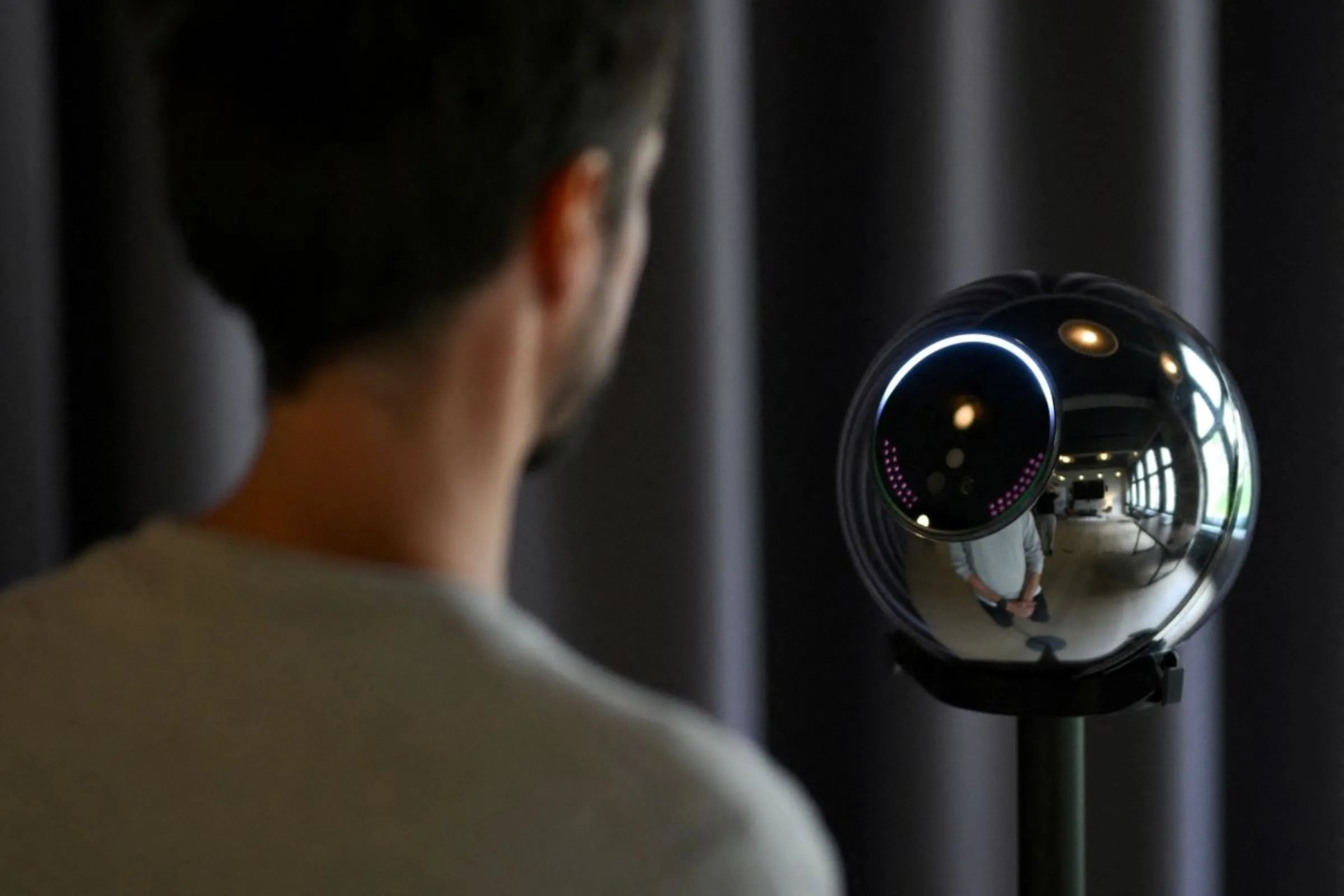
Imagine: you approach a metal sphere the size of a bowling ball, look into it for a few seconds — and receive a digital passport that confirms you are a real person, not a bot.
In short: World Orb is a biometric device that scans the iris of the eye and generates a unique digital identifier, without storing any image.
⚡ In short
- ✅ World Orb — an iris scanning device that creates an anonymous digital ID
- ✅ Iris, not face: unique to every person, even twins, and does not change throughout life
- ✅ Image deleted: Orb processes the scan locally and sends only an encrypted code to the phone
- 🎯 You will gain: an understanding of how World ID works, how it differs from Face ID, and where it is already applied
- 👇 Below — detailed explanations, tables, and links to sources
📚 Article contents
🎯 What is World Orb and who created it?
World Orb is a biometric device from Tools for Humanity, co-founded by Sam Altman (CEO of OpenAI). The Orb scans the iris of the eye and issues a digital identifier — World ID — which confirms that the owner is a unique living person.
The project started in 2019 under the name Worldcoin. In October 2024, it was rebranded to World Network (or simply World) — to reflect a broader mission: not just a cryptocurrency, but a global digital identity infrastructure.
«Finally, as the project's scale grows along with the importance of the World ID proof-of-personhood protocol, the name "Worldcoin" no longer reflects the project's mission» — official statement from World Network, October 2024.
Tools for Humanity was founded in 2019 by Sam Altman, Alex Blania, and Max Novendstern. The company has raised over $240 million from investors such as Andreessen Horowitz, Coinbase Ventures, and Khosla Ventures.
As of May 2025, the network has 26 million registered users, of whom 12 million have completed full verification via Orb in more than 160 countries.
The World ecosystem consists of four components:
- World Orb — hardware scanning device
- World ID — digital "proof of personhood" identifier
- World App — mobile wallet and entry point
- World Chain — Layer 2 blockchain based on Ethereum, launched in October 2024
Sources: Axios, October 17, 2024 · Wikipedia: World (blockchain) · CNBC, April 30, 2025
🎯 Why the iris, not the face or fingerprint?
The iris has the highest uniqueness among all biometric features — its pattern is unique even in identical twins, does not change throughout life, and cannot be read imperceptibly.
«The iris has high entropy — a very rich pattern of small holes, lines, and ridges, making it both complex and unique» — official blog of Tools for Humanity.
Here is a comparison of the three main biometric features:
| Parameter |
Fingerprint |
Facial recognition |
Iris of the eye |
| Uniqueness |
High |
Medium |
Highest |
| Stability |
Can change (injuries, age) |
Changes (age, surgery) |
Does not change throughout life |
| Can be read without consent? |
Yes (from surface) |
Yes (cameras) |
No (special equipment required) |
| Difficulty of forgery |
Medium |
High (deepfake) |
Very high |
| Application in World |
❌ |
❌ (Face Auth — separate function) |
✅ |
An important detail: unlike DNA, the iris does not contain genetic information and does not reveal family ties. This reduces the risks of data misuse.
Sources: World Blog: Iris Biometrics · World Blog: Why Biometrics
🎯 How scanning works: step by step
The entire process takes about 30 seconds. The Orb photographs the iris, processes the data locally on the device, sends an encrypted code to the phone, and deletes all images. No image ever leaves the device.
Detailed sequence:
-
Download the World App — the application generates a pair of cryptographic keys (public and private) and forms a unique QR code for the verification session. The private key is stored exclusively on your phone and is never transmitted to servers.
-
Find an Orb — verification can be done at a physical location (kiosk, flagship location, certified operator) or ordered via On Demand Orb — an operator comes to you. An up-to-date map of locations can be found in the World App.
-
Provide consent — before scanning, the application displays the terms of data collection. Without explicit consent, the process does not begin. You also choose whether to allow temporary storage of images for algorithm improvement — this is disabled by default.
-
Liveness detection — before scanning the iris, the Orb verifies that it is a living person. Multispectral sensors and neural networks detect attempts at deception: printouts, screens, artificial eyes, or silicone masks. This stage takes a few seconds and is fully automatic.
-
Iris scanning — infrared cameras take a series of eye images under different lighting conditions. The infrared range allows for a clear iris texture regardless of eye color and ambient lighting.
-
IrisCode generation — neural networks process the images directly on the Orb's chip (without cloud transfer), extract unique texture characteristics, and convert them into a numerical code — IrisCode. It is impossible to restore the original image from this code.
-
Uniqueness verification — the IrisCode is compared with all previously registered codes in the global database. If a match is found, registration is rejected: each person can have only one World ID. This step makes the system resistant to Sybil attacks.
-
Data deletion — immediately after IrisCode generation, all images are deleted from the device. Only an encrypted signature, confirming successful verification, is sent to the user's phone.
-
World ID activated — the user's public key is added to a smart contract on World Chain. From this moment, World ID can be used for verification on any platform that supports the protocol, without repeated scanning.
Sources: World Blog: Understanding the Orb · World Whitepaper
🎯 What is IrisCode and how is it generated?
IrisCode is a numerical representation of the iris texture. It is generated using machine learning directly on the Orb and is an irreversible hash — it is impossible to restore the original image from the code.
The IrisCode generation process consists of four stages:
- Image capture — infrared and visible cameras take images considering lighting and eye position.
- Segmentation — a neural network separates the iris texture from eyelashes, pupil, reflections, and other elements.
- Encoding — the model extracts the most important texture characteristics and converts them into a numerical code (binary vector).
- Hashing — the code undergoes a one-way mathematical function. Even the company cannot restore the original image from the final code.
An important detail rarely discussed: the IrisCode generation algorithm is proprietary — meaning third-party researchers cannot reproduce or independently verify it. This is one of the key questions regarding the system's transparency that should be kept in mind.
Sources: World Blog: Iris Biometrics · World Blog: Understanding the Orb
🎯 What is zero-knowledge proof and why is it here?
Zero-knowledge proof (ZKP) is a cryptographic method that allows proving a fact without revealing details. In World ID, it allows confirming "I am a unique person" without transmitting any personal data to third-party platforms.
Analogy: you can prove to a cashier that you are 18 years old without showing a passport with your date of birth, address, and photo. ZKP does the same in the digital world — at the level of mathematics.
How it works in World ID:
- When a platform (e.g., an application) requests verification, the World App receives a request with context (application ID, transaction data).
- The World App generates a ZK-proof: it mathematically proves that the user's IrisCode is in the global list of verified codes, without revealing whose code it is.
- The platform verifies the proof. If it is correct, it confirms that a real, unique person is in front of it.
- No personal data, no IrisCode, no link between different interactions of the same user.
World uses the open protocol Semaphore for ZKP implementation.
Sources: World Whitepaper · Satoshi Club: How Worldcoin Works
🎯 What is proof of personhood — and why is it needed?
Proof of personhood is a mechanism for confirming that a real, unique human being, not a bot, AI agent, or fake profile, is behind an account.
The problem has become critical in the era of generative AI: GPT-4 and similar models pass CAPTCHAs, generate convincing texts, and can mass-create fake accounts. Traditional verification methods — email, phone number, even CAPTCHA — are no longer reliable indicators that a human is behind an account.
World ID solves this through global deduplication: each IrisCode is compared with all previously registered ones. If a match is found, registration is rejected. This prevents a single person from creating multiple accounts (a so-called Sybil attack).
🎯 How does World ID differ from Face ID and state biometrics?
There are three fundamentally different models of biometrics — local (Face ID), state (passports, Aadhaar), and global anonymous (World ID). They differ in purpose, data storage location, and whom you trust.
| Parameter |
Face ID (Apple) |
State biometrics |
World ID |
| Purpose |
Device unlock |
Personal identification |
Proof of personhood |
| Where data is stored |
Locally on device chip |
Centralized state databases |
Distributed (SMPC) |
| Does it reveal identity? |
No (locally) |
Yes |
No (ZKP) |
| Global uniqueness |
❌ |
Within the country |
✅ (160+ countries) |
| Who controls? |
Apple / user |
State |
Tools for Humanity / decentralization |
| Application |
One device |
State services |
Any online platform |
Key difference: Face ID never leaves your device and does not compare you to anyone else. World ID, conversely, is built on global comparison — this is how uniqueness is ensured.
🎯 Where is World ID already used and where is it unavailable?
World ID is already integrated into over 30 platforms, including Minecraft, Reddit, Discord, Telegram, and Shopify. In some countries — Kenya, Indonesia — operations have been suspended or banned.
Partnerships and integrations (as of 2025):
- 🎮 Razer, Minecraft — player verification
- 💬 Discord, Telegram, Reddit — confirming that a human is behind the account
- 🛒 Shopify — fraud protection
- 💳 Visa, Match Group (Tinder) — partnerships announced in April 2025
- 📹 Zoom, WhatsApp, FaceTime — Face Auth integration (face comparison feature)
- 🏛️ Taiwan, Malaysia — government-level partnerships in digital identity verification
Where unavailable or restricted:
- 🚫 USA — until April 2025, Orb did not operate in the USA; full launch occurred on April 30, 2025, in six cities
- 🚫 Kenya — in May 2025, the government mandated the deletion of all collected biometric data
- 🚫 Indonesia — temporary suspension of operations in May 2025
- 🚫 Hong Kong — raids and ban on operations
- ⚠️ Spain, Portugal, Brazil, Colombia, India, South Korea — regulatory investigations
Sources: Flaming Ltd, May 2025 · CNBC, April 30, 2025 · Wikipedia: World (blockchain)
🎯 What versions of Orb exist?
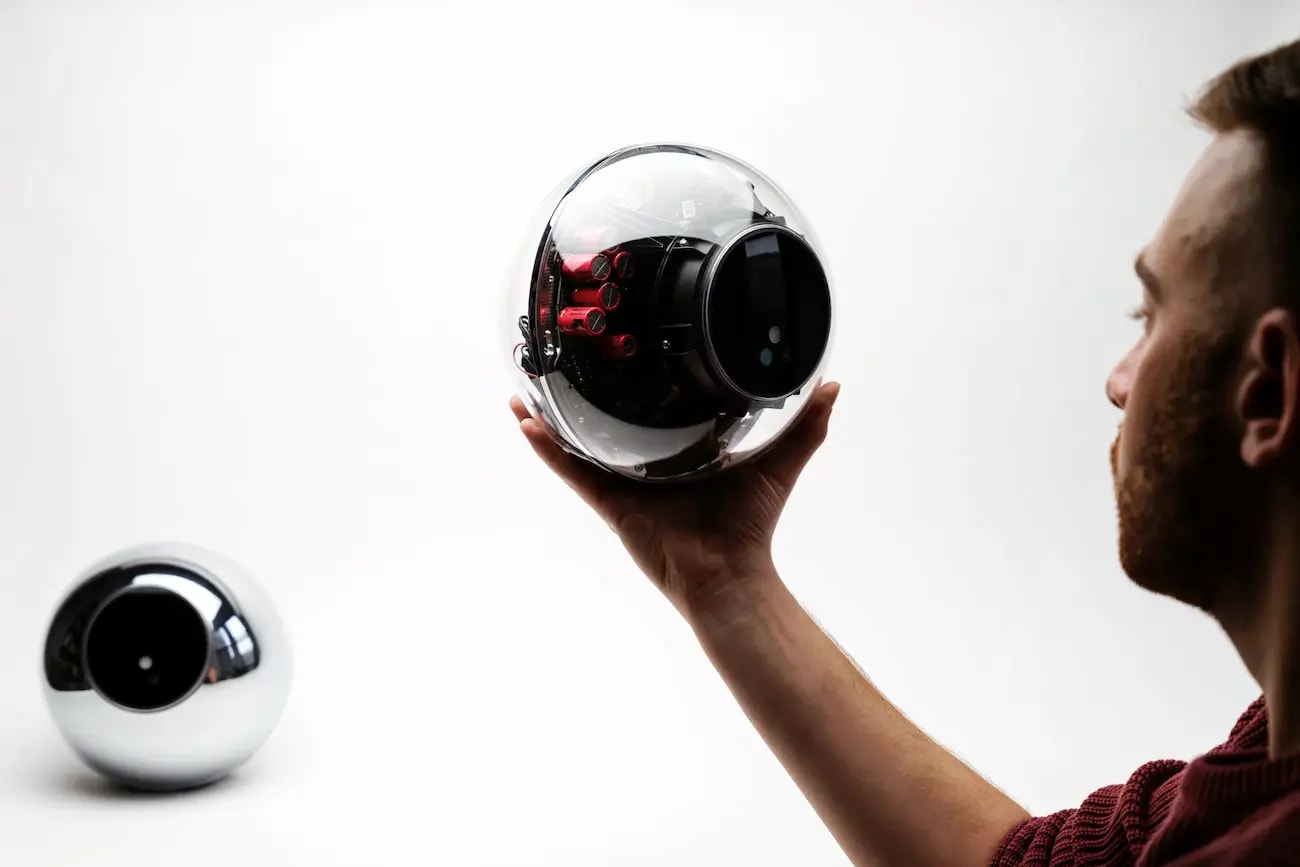
As of 2025, there are three generations of devices: Orb Gen1 (2021–2024), Orb Gen2 (October 2024), and Orb Mini (announced May 2025, full release 2026).
| Version | Date | Key features |
|---|
| Orb Gen1 | 2021–2024 | First generation. Basic sensors, Wi-Fi connectivity. Limited AI performance. |
| Orb Gen2 | October 2024 | NVIDIA Jetson chip (5x AI performance), 5G, 30% fewer parts, three times higher production capacity, removable SD card for audit, improved IR cameras. |
| Orb Mini | Announced May 2025 / released 2026 | Portable device the size of a smartphone. Simplifies the scanning process. In the future — POS terminal for iris-based payments. |
Also in October 2024, World launched the Community Operators program: anyone can purchase or rent an Orb Gen2 and earn WLD tokens for each verified person.
Sources: World Blog: New Orb announcement · Mobile ID World: Orb Mini
❓ Frequently Asked Questions (FAQ)
Does the Orb store my image?
No. By default, all images are processed locally on the device and deleted immediately after IrisCode generation. Users can voluntarily allow temporary storage to improve algorithms.
Can verification be revoked?
Yes. World provides an "unverify" function — users can request the deletion of their IrisCode from the system.
What is the WLD token and is it mandatory to receive it?
WLD is the project's cryptocurrency, which verified users receive weekly (where legally permitted). Receiving the token is not a mandatory condition for using World ID.
How does World ID differ from a regular Google login?
A Google login identifies an account and transmits personal data. World ID only confirms that a unique living person is behind the account — without transmitting a name, email, or any personal data.
Is World Orb safe for my data?
The question is not unfounded. The system has strong arguments for privacy protection (local processing, ZKP, SMPC), but also has open questions: proprietary algorithm, regulatory bans in several countries. A detailed analysis is in our article "World Orb and privacy".
✅ Conclusions
World Orb is not just an eye-scanning device. It is an attempt to solve one of the most pressing problems of the digital age: to prove that a real person is behind an account, without revealing who that person is.
Key facts to remember:
- The project was renamed from Worldcoin to World Network in October 2024
- The Orb processes data locally and deletes images after IrisCode generation
- The system uses zero-knowledge proofs — verification without transmitting personal data
- As of 2025 — 26 million registered users, partnerships with Visa, Tinder, Razer, Reddit
- Regulatory issues are open: bans in Kenya, Indonesia, investigations in the EU
The technology is ambitious and technically sound. But trust in any global biometric system is built over years — and depends not only on the architecture but also on the company's transparency and the behavior of regulators.