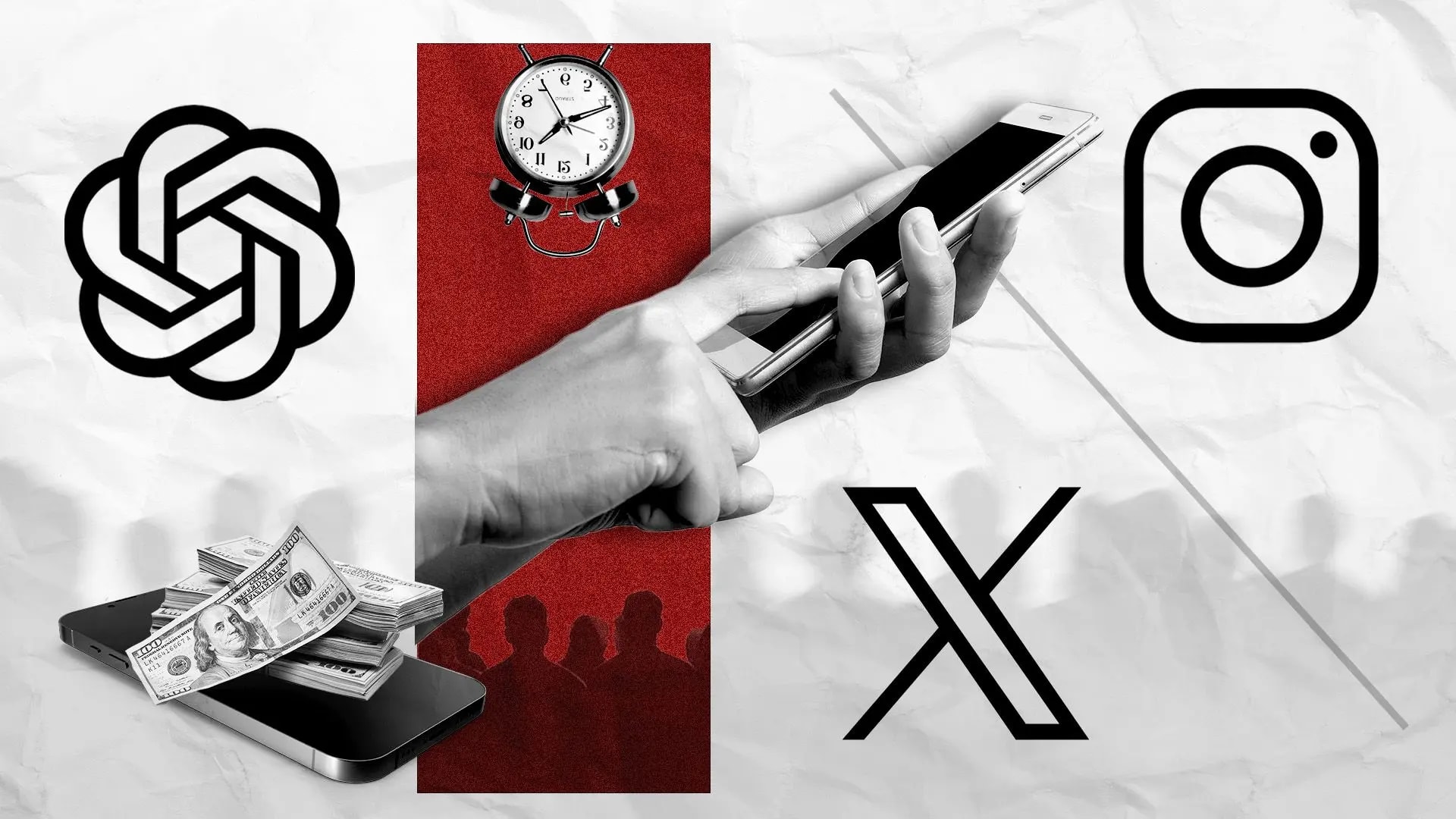
In 2026, bots on X (Twitter) and other platforms turned social networks into a "toxic swamp" of fakes, spam, and artificial noise. OpenAI decided to fix this — it is developing its own platform exclusively for real people. Spoiler: the key is mandatory biometric verification via Face ID or iris scanning (World Orb), so that bots simply cannot register.
⚡ In Brief
- ✅ OpenAI is creating a "human" social network where every account is a real person, verified by biometrics.
- ✅ Verification via Apple Face ID or Worldcoin's Orb (founded by Sam Altman) is "proof of personhood," much more reliable than a phone or email.
- ✅ The project is in its early stages (team < 10 people), with no launch date, but has already boosted the WLD token's price by 16–40%.
- 🎯 You will get: an understanding of how this could change social networks, what privacy risks exist, and whether this platform is worth waiting for.
- 👇 Below — detailed explanations, examples, and tables
📚 Article Contents
Why OpenAI Decided to Create Its Own Social Network
After the mass layoffs of moderators at X (Twitter) in 2025, the bot problem became critical: spam, fake accounts, crypto scams, and AI-generated content flooded the platform. Sam Altman repeatedly called X "AI-Twitter," where it's hard to distinguish a human from a bot. 😞
OpenAI sees an opportunity in this: to leverage the popularity of ChatGPT and Sora to create an alternative — a clean, authentic network exclusively for people. The project is at a very early stage (team of fewer than 10 people), but the idea has already leaked to the press (Forbes, January 28, 2026).
Main official source of the leak: Forbes — "OpenAI Wants To Create Biometric Social Network To Kill X’s Bot Problem" (January 28, 2026). This article became the basis for all subsequent news (Gizmodo, CoinDesk, NDTV, etc.). OpenAI has not officially commented, but Forbes refers to several people familiar with the development.
Additional confirmations:
This is not just another social network — it's OpenAI's attempt to reimagine the internet as a "human" space in an era where AI makes fakes indistinguishable from reality. 🚀
How Bot-Free Verification Will Be Implemented
The main mechanism is proof of personhood. Instead of email or SMS — biometrics upon registration. This makes creating thousands of fake accounts practically impossible.
- One-time verification upon account creation
- Unique ID, linked to biometrics
- No ability to "recover" an account via another device without re-verification
Technologies: Face ID vs World Orb — Comparison
According to Forbes, OpenAI is considering two main methods for "proof of personhood" verification (proving that a user is a real human): Apple Face ID or World Orb by Worldcoin (Tools for Humanity, founded by Sam Altman). This is not just email registration — biometrics make mass bot creation almost impossible. Here's a detailed comparison:
| Parameter | Face ID (Apple) | World Orb (Worldcoin) |
|---|
| Type of Biometrics | Face scan + depth map (TrueDepth camera with infrared projector, over 30,000 points) | Iris scan (iris code) with multispectral sensors for liveness and uniqueness verification |
| Reliability against Fakes | High (protection against photos, masks, partially against deepfakes), but vulnerable to advanced deepfake attacks or twins (1:N comparison is weaker than Orb) | Maximum (iris is unique even in identical twins; verifies eye liveness, difficult to fake without physical access) |
| Availability | Very high — on all iPhones from 2017 (X and newer); works locally on the device | Low — requires a physical Orb (or future mobile scan in 2026); currently, Orb is available in limited countries, operators conduct scans |
| Privacy and Data Storage | Data (mathematical template) is stored locally on the device's Secure Enclave; Apple does not have access to raw images | Images are deleted from the Orb after processing; iris code is encrypted, zero-knowledge proofs and AMPC (anonymous multi-party computation) are used; hash on the blockchain, but there are risks of centralization and regulatory bans (Kenya, India, EU) |
| Owner / Integration | Apple (possible integration via API, but without confirmed partnership with OpenAI) | Tools for Humanity (Sam Altman — co-founder and chairman); direct connection to OpenAI via Altman |
| Potential Downsides | Limited to iOS users; deepfake risks increase with AI | "Creepy" factor (eye scan); regulatory bans; need for a physical visit to an Orb |
Sources: Forbes (28.01.2026), Gizmodo, Worldcoin whitepaper.
What Features Are Planned for the Platform
There is no official announcement — the project is early stage (team <10 people). But according to leaks from Forbes and Gizmodo, the platform is positioned as a "real-humans-only" social network with an emphasis on authenticity and AI-content:
- Creation and distribution of AI-generated content (images from DALL·E, videos from Sora, text from ChatGPT) — only from verified users
- Authentic discussions, posts, comments without bot spam, crypto scams, and AI-generated noise
- Monetization opportunities for real creators (e.g., through premium features, donations, or AI tools, similar to X Premium)
- Deep integration with OpenAI tools (ChatGPT, Sora, future agents) for content generation directly within the app
- Focus on "clean" recommendations and feed — without bots distorting trends
The goal is to solve the "dead internet" and "AI-Twitter" problem, where bots dominate. Source: Forbes, Gizmodo (January 2026).
Market and Community Reaction
News from Forbes (January 28, 2026) immediately impacted the market: the Worldcoin (WLD) token surged by 16–40% in a day (depending on the exchange — CoinDesk recorded +27%, ForkLog +40%, Yahoo +16%). This is due to the potential integration of Orb with OpenAI.
On X (Twitter) and Reddit, reactions are polarized:
- Positive: "Finally someone will make the internet human again", "end of dead internet theory", "Altman saves social media from bots" 😎
- Negative: "This is Orwell 2.0 — giving our eyes to corporations", "Privacy is dead", "Creepy eye scans for a social network?!" 😱
Critics from the privacy community (Gizmodo, India Today) warn about the risks of surveillance and the exclusion of people without access to biometrics. Sources: CoinDesk, ForkLog, Reddit discussions.
Advantages and Risks of Biometric Verification
Advantages:
- Almost 100% protection against mass bots (impossible to widely fake an iris or Face ID)
- Cleaner discussions, recommendations, and trends — free from spam, fakes, and disinformation
- Authentic AI content from real people (ideal for creators and brands)
- Potential to become the new standard for a "human" internet in the AI era
Risks:
- Biometric data leak — a catastrophe (face/eye cannot be changed like a password; hackers will get permanent identification)
- Accessibility issues (not on all iPhones; Orb requires physical scanning — a barrier for many countries/people)
- Concentration of power in the hands of OpenAI/Apple/Worldcoin (Altman controls both projects)
- Regulatory bans (some countries already block Worldcoin due to privacy concerns)
- Deepfake attacks or errors (e.g., alcohol affects iris scan)
Comparison with Existing Platforms
| Platform | Verification | Bot Level | Pros | Cons |
|---|
| X (Twitter) | Phone/email + Blue check (paid) | High (after moderator cuts — spam, AI bots) | Speed, reach, real-time discussions | Toxicity, fakes, bot scams |
| Threads (Meta) | Instagram account (often phone/email) | Medium (better moderation, but bots exist) | Integration with IG, calm feed | Meta censorship, limited freedom |
| OpenAI (future) | Biometrics (Face ID or Orb) | Minimal (as planned — humans only) | Authenticity, AI content from real creators | Privacy at risk, high barrier to entry, leak risks |
What's Next: Forecasts for 2026–2027
The project is in its early stages — no launch date, small team. If OpenAI proceeds, a launch is possible in the second half of 2026 or 2027 (after resolving GDPR regulatory issues, privacy concerns, and technical tests). Competition with Meta (Threads), X, and TikTok will be fierce, but if biometrics prove effective against bots — this could become the new standard for a "human" internet.
Follow announcements from Sam Altman (he often tweets about this). If integration with Worldcoin is confirmed — WLD could rise even further. But privacy risks could lead to scandals or bans. 🚀🤔
❓ Frequently Asked Questions (FAQ)
Will registration be only via eye scan (Orb)?
No. According to leaks from Forbes, the team is considering two main options: Apple Face ID (face scan) or World Orb (iris scan). The choice is not yet final; it might be a combination or an optional selection. The main goal is biometric verification for "proof of personhood" (proof that a real person is behind the account). Source: Forbes, January 28, 2026.
Is it safe to provide biometrics to OpenAI?
The risks are high. Biometric data (face or iris) does not change like a password. If a leak occurs, recovery is impossible. OpenAI and Worldcoin promise secure hashes and decentralized storage, but no company is immune to hacks or misuse. Privacy activists are already calling it "Orwellian." Critics from Gizmodo and India Today emphasize that this could lead to surveillance and exclusion (of people without access to devices). Sources: Gizmodo, India Today.
When is the platform expected to launch?
There is no official date. The project is at a very early stage – the team has fewer than 10 people, and development has been quietly underway since early 2025. According to sources from Forbes and Gizmodo, the launch is possible in the second half of 2026 or even 2027, provided there are no delays due to regulatory issues (GDPR, biometric privacy) and technical challenges. OpenAI has not yet commented.
Will this affect Worldcoin (WLD) and the token?
Yes, it already has. Following the Forbes publication on January 28, 2026, the WLD price surged by 16–40% (depending on the exchange) within hours. If Orb integration is officially confirmed, growth could continue, as this would be a validation of Worldcoin's technology by OpenAI. However, if OpenAI chooses only Face ID, the effect might fade. Sources: CoinDesk, ForkLog.
Will bots still be able to bypass biometrics?
It's almost impossible on a mass scale. The iris is unique even in twins, and Face ID is protected against photos/deepfakes (depth scanning). But theoretically: deepfake attacks on Face ID or fake Orb scans (if someone gains access to the device). Sources note that this is significantly more reliable than phone/email, but not 100% perfect. A question from Reddit and Forbes comments: "What if GenAI generates biometrics?" – there's no answer yet.
Will the platform be free or monetized?
No details are available, but according to leaks, monetization is planned for real creators (similar to X Premium or YouTube). This might be through AI content (Sora, DALL·E), where verified users would receive benefits. This is not yet confirmed.
Will the platform be available in all countries?
It's currently unknown. World Orb already operates in many countries, but Face ID is only available on iPhones. Regulatory barriers (EU with GDPR, China, India) may limit access. Sources mention "accessibility needs" (accessibility for people with disabilities) as an open question.
✅ Conclusions
OpenAI is trying to solve one of the biggest problems of 2026 — bots and fakes on social media. Biometric verification is a radical but potentially effective step. However, the price is your privacy. Are you ready to scan your eye/face for a cleaner internet? 🤔
Sources: Forbes (01.28.2026), Gizmodo, CoinDesk.
📖 Recommended reading: other fresh materials about OpenAI and ChatGPT
- 🔍 ChatGPT Search — overview, how it works, and tips
A detailed breakdown of ChatGPT's real-time search function: how internet integration works, source citations, advantages, and how to avoid inaccuracies. Ideal for those who want maximum relevance from AI.
- 🗂️ Ads already in ChatGPT: when they will appear in your chat in 2026
Android app code leak: sponsored carousels and Bing Ads-based advertising in the free version from early 2026. Paid users without ads — all details with dates and screenshots.
- 🌐 ChatGPT Atlas: OpenAI's AI Browser Revolution
An overview of OpenAI's new AI browser with page summarization, data analysis, and agent mode. How Atlas could replace Chrome and why this is the next big step after ChatGPT.
- 🔞 ChatGPT 18+: OpenAI's adult mode
What is known about the new 18+ mode in ChatGPT: age verification, topics of intimacy and emotional support, Sam Altman's words, and how it will affect the freedom of communication with AI.
- 😎 ChatGPT's new personality — what it is and which mode to choose
With GPT-5.1, a system of presets (Friendly, Candid, Efficient) and sliders for tone, warmth, and emojis appeared. How to choose the ideal mode for your tasks and not compromise productivity.
All articles are updated regularly (last update — January 2026). If you want to dive deeper into the OpenAI ecosystem — start with these! 💡