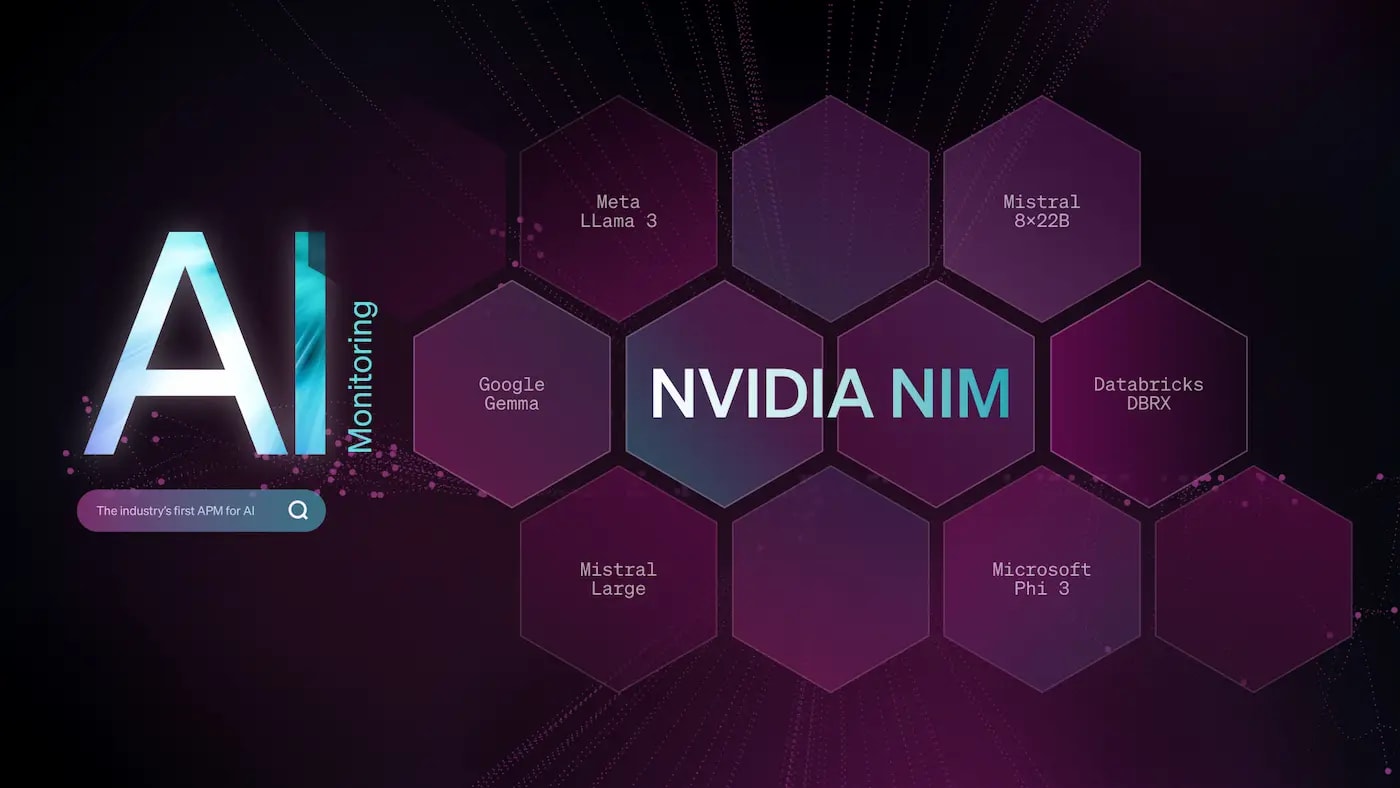
As a continuation of this topic, I will delve into a more practical aspect — which specific models in NVIDIA NIM are best suited for different types of tasks, and how I use them in real agentic and RAG systems. I will separately focus on the trade-offs between speed, quality, and context length, as well as how these choices affect the architecture of production systems.
A detailed technical breakdown is available here: NVIDIA NIM: Which Models for Which Tasks — Technical Breakdown 2026.
Contents
What Exactly Did NVIDIA Launch
In July 2024, NVIDIA quietly changed its strategy. Before that, NIM (NVIDIA Inference Microservices) was an enterprise product: a container deployed on its own infrastructure, with pay-per-use. Then, the company opened a public model catalog on build.nvidia.com — and made it free for NVIDIA Developer Program members.
As of May 2026, the platform includes over 100 AI models hosted on DGX Cloud and accessible via a standard REST API compatible with the OpenAI SDK. Registration requires only an email — no credit card, no identity verification, no expiration date for free access.
What is available:
- Text Models: Llama 4, DeepSeek V4-Pro, Qwen 3, Kimi K2.5, GLM 5.1, Nemotron, Mistral
- Multimodal: models for image and video analysis
- Specialized: embedding models, rerankers, safety guardrails (NemoClaw), speech, translation
- Scientific: models for protein analysis, weather forecasting
Technically, each model is available through a single API endpoint. To switch from DeepSeek-R1 to Qwen 3.5, you only need to change one line in the request. This is not an accidental decision — it's an architectural choice with far-reaching consequences.
Upon registration, developers receive 1,000 free inference credits. The free tier rate limit is 40 requests per minute (RPM). This is sufficient for prototyping, but not for production agentic workflows — we will return to this issue later.
Official launch documentation: NVIDIA Technical Blog, August 2024.
Why Inference is Gradually Becoming a Commodity Layer
To understand what is really happening, we need to look at the evolution of the AI stack over the last three years.
How the AI Stack Looked in 2022–2023
| Layer |
Player |
Monetization Model |
| Compute (GPU) |
NVIDIA |
Hardware sales |
| Models |
OpenAI, Anthropic, Google |
API per token |
| API Consumers |
Developers, Products |
— |
Reference architecture: Agent orchestration layer
In practical agentic systems, I view interaction with LLMs not as a direct API call, but as a multi-layered pipeline, where each layer is responsible for a separate function: routing, model selection, describing its capabilities, and directly executing the request through a specific provider.
Agent Orchestrator
   → Router Layer
      → Model Capability Registry
         → Providers (NVIDIA / OpenRouter / OpenAI)
Agent Orchestrator is the top layer of the system, which receives a business request and breaks it down into subtasks. Its job is not to call a model directly, but to determine what types of models are needed: reasoning, coding, summarization, or retrieval.
Router Layer is responsible for selecting a specific candidate among available models. Latency, cost, context window, and current rate limits are considered here. In essence, it's a decision engine that optimizes the request for current execution conditions.
Model Capability Registry is an abstraction layer that describes the capabilities of each model in a standardized format: support for tool calling, structured output, maximum context, support for reasoning mode, stability of JSON responses, etc. This allows the system to treat models as interchangeable components.
Providers (NVIDIA, OpenRouter, OpenAI, and others) are the lower layer that implements the actual inference execution. At this level, the system no longer makes architectural decisions — it only executes the request within the API of a specific provider.
This approach allows building provider-agnostic systems where changing an infrastructure provider does not affect business logic or the orchestration layer.
In this scheme, everything is simple: NVIDIA sells hardware, OpenAI builds models on this hardware and sells access to them. Developers pay for tokens.
How the AI Stack Looks in 2026
| Layer |
Players |
Trend |
| Compute (GPU) |
NVIDIA, AMD, custom silicon |
Shortage is decreasing |
| Models |
OpenAI, Anthropic, Meta, Mistral, Alibaba, DeepSeek... |
Becoming interchangeable |
| Inference layer |
NVIDIA NIM, Together, Groq, Fireworks, OpenRouter... |
Commoditization |
| Orchestration |
LangGraph, CrewAI, OpenAI Agents SDK... |
Standardization |
| Products |
Thousands of independent teams |
— |
I think the key change here is the emergence of the inference layer as a separate market. Not long ago, the question "where to run the model" practically didn't exist: either OpenAI API or your own infrastructure. Now, a whole industry of inference providers is forming between the model and the developer, competing not on models, but on speed, price, latency, routing, and access to open-source LLMs.
Why This is Commoditization, Not Just Competition
Commoditization occurs when a product becomes interchangeable. In the case of inference, this means:
- All providers use OpenAI-compatible APIs — migrating between them takes literally two lines of code
- Open models (Llama, DeepSeek, Qwen) are available everywhere — there's no lock-in to a specific model weight vendor
- Inference prices are falling: according to Q2 2026 data, the price spread for the same model between providers reaches 6x, and latency — 5–7x
- Competitive advantage is shifting from "who has the better model" to "who offers the better infrastructure deal"
When inference becomes a commodity, a fundamental question arises: who controls the distribution layer? This is precisely where NVIDIA is making a strategic move.
How NVIDIA is trying to occupy the AI runtime layer
NVIDIA is starting to control not only the computation but also the distribution layer of the open-source LLM ecosystem. This is a fundamentally different position than selling GPUs.
Let's break down the logic:
Until July 2024 — NIM as an enterprise product
NIM was sold to corporate clients as a way to deploy optimized inference on their own NVIDIA infrastructure. It was a niche offering for large companies with their own data centers.
After July 2024 — free access as a funnel
Aihola analysts describe the strategy frankly: the catalog is a top-of-funnel play for NVIDIA AI Enterprise, a paid inference platform. The developer journey is designed with minimal friction:
- Prototyping on a free API (build.nvidia.com)
- Testing on GPU sandbox instances (bare-metal H200 and B300 hardware, up to 288 GiB VRAM)
- Self-hosted NIM deployment on own or rented NVIDIA infrastructure
- NVIDIA AI Enterprise corporate contract
This means the free tier is not the end product. It's a way to put NVIDIA at the center of the entire AI development experience: conventions are learned on NVIDIA APIs, models are tested on NVIDIA hardware, and deployment pipelines are built for NIM containers.
TensorRT-LLM as a technical differentiator
NIM's technical advantage is its optimized inference engine based on NVIDIA TensorRT and TensorRT-LLM. At runtime, NIM automatically selects the optimal inference engine for a specific combination of model, GPU, and system. This provides:
- Lower latency compared to standard vLLM stacks
- Higher throughput for batch inference
- Built-in support for Kubernetes autoscaling
- Standardized observability metrics
I think it's important to understand here: NVIDIA doesn't create most of the models in its catalog. The company takes open-weight models, optimizes them for its own GPU hardware, and provides access through its own inference infrastructure. The model weights themselves remain public and available under Apache 2.0, MIT, or Llama Community License. The closed part of this story is not the models, but the serving infrastructure, inference optimizations, and integration with the NVIDIA ecosystem.
NemoClaw — a new element of the stack
In 2026, NVIDIA added NemoClaw to the platform — a security stack for autonomous agent execution. This is an out-of-process enforcement layer that cannot be bypassed by the agent itself and maintains a full audit trail for regulated industries. Notably, NemoClaw is hardware-agnostic — it works on AMD, Intel, and NVIDIA hardware, although inference performance is optimized for NVIDIA GPUs.
What's changing for AI agent architectures
Most articles about free NIM focus on the fact: "you can use Llama for free." But a much more interesting consequence is how cheap inference is changing the architecture of AI agents themselves.
Old paradigm: one agent — one large model
When the GPT-4 API cost $0.03–0.06 per 1K tokens, the architectural decision was simple: one powerful agent, one model, minimal API calls. The cost of inference dictated the architecture.
New paradigm: multi-model orchestration
Cheap inference makes a completely different architecture economically viable — specialized agents for each task:
| Agent Role |
Optimal Model |
Reason for Choice |
| Planner / Orchestrator |
Large reasoning model (Llama 4, DeepSeek V4-Pro) |
Requires general logic and task decomposition |
| Reasoning / Analysis |
Nemotron, DeepSeek-R1 |
Optimized for complex reasoning |
| Retrieval / RAG |
Kimi K2.5, embedding model |
Long context, efficient vectorization |
| Coding |
Qwen 3 Coder, Granite Code |
Specialization in code generation |
| Summarizer |
Smaller model (GLM-4, Gemma) |
Economical, sufficient for summarization |
| Safety / guardrails |
NemoClaw, Llama Guard |
Specialized protection |
It is free or cheap inference that makes such an architecture realistic. If a summarizer agent handles 500 requests a day, and the price approaches zero, you can afford a separate specialized model instead of running everything through an expensive GPT-4o.
Numbers that change the perception of scale
According to forecasts by Deloitte and Gartner, the autonomous AI agents market will reach $8.5 billion by the end of 2026. Gartner recorded a 1,445% increase in requests for multi-agent systems from Q1 2024 to Q2 2025. But Gartner also warns: over 40% of enterprise agentic AI projects may be canceled by 2027 due to rising costs and insufficient risk control.
For most of these projects, inference cost is one of the key survival factors. Platforms like NVIDIA NIM directly influence this equation.
A pattern that works in production
The practical takeaway from teams building agentic systems in production is: the orchestrator uses a large capable model, and the executive agents use the cheapest model that can handle its specific task. This is not a quality compromise. It's proper responsibility decomposition.
How NVIDIA Build differs from OpenRouter, Groq, and Together AI
NVIDIA NIM is often mentioned alongside other inference providers, but this is an incorrect comparison — they occupy different niches in the AI stack. Here's a structured market overview as of Q2 2026:
| Platform |
Role |
Key Advantage |
Limitations |
| OpenRouter |
Aggregation layer |
200+ models via a single API, avoiding vendor lock-in |
5.5% commission on each credit purchase; an extra hop in latency |
| Together AI |
Inference provider + fine-tuning |
Lowest price at sustained throughput, fine-tuning API |
Less specialization, standard GPU stack |
| Groq |
Ultra-low latency inference (custom LPU) |
400–800 tokens/sec on 70B models, fastest streaming |
Limited model selection, premium pricing (2–3x more expensive than Together) |
| Fireworks AI |
Production-grade OSS serving |
Better structured output and function calling, 747 TPS |
Higher price for structured output ($0.90/M for 70B) |
| NVIDIA Build (NIM) |
Direct GPU ecosystem layer |
Free prototyping → GPU sandbox → self-hosted NIM → enterprise |
40 RPM free tier, not for high-volume production without a contract |
NVIDIA's fundamental difference: it's not just another inference API. It's a vertically integrated path from free prototyping to enterprise deployment on its own hardware. No other provider offers this — OpenRouter doesn't sell GPUs, Groq doesn't have a self-hosted deployment option, Together AI doesn't manufacture processors.
OpenRouter vs NVIDIA NIM: comparing infrastructure approaches
| Criterion |
OpenRouter |
NVIDIA NIM |
| Role in the stack |
Aggregation API layer (model routing + unified access) |
Inference infrastructure on top of the NVIDIA GPU ecosystem |
| Approach |
Multi-provider abstraction layer |
Vertical integration (hardware → inference → API) |
| Models |
Wide catalog of different providers through a single API |
Curated set of open-weight models optimized by NVIDIA |
| Routing |
Built-in model routing between providers |
Manual model selection or a simple selection layer |
| Optimization |
Abstraction over various inference systems |
Optimization for the NVIDIA GPU stack (TensorRT, CUDA ecosystem) |
| Latency / Performance |
Depends on the chosen provider |
Consistently optimized for NVIDIA hardware |
| Failover / redundancy |
Fallback between models is possible |
Limited, depends on the specific endpoint |
| OpenAI compatibility |
Full compatibility |
Full compatibility via NIM API |
| Strong suit |
Flexibility and multi-model routing |
Infrastructure optimization and GPU-level performance |
| Primary use case |
AI applications, agents, experiments with different models |
Production inference on the NVIDIA ecosystem |
How to choose between providers
Based on Infrabase.ai and ToolHalla:
- Prototyping and research → NVIDIA NIM (free, 100+ models)
- Real-time streaming chat, coding agents → Groq (lowest latency)
- Production batch, steady-state throughput → Together AI or Fireworks
- Structured output, function calling in production → Fireworks AI
- Provider-agnostic routing, avoiding lock-in → OpenRouter or LiteLLM
- Full-stack: from proto to enterprise self-hosted → NVIDIA NIM
What limitations appear in production
Most materials about NVIDIA NIM stop at "everything is free and easy." But a technical audience needs an honest overview of the problems that arise in real-world use.
1. Rate limits — the main barrier
The Free tier is limited to 40 RPM (requests per minute). This is enough for a single developer testing a model. But for agentic workflows, it's a fundamental problem.
A typical multi-agent graph on LangGraph for a single user "logical request" can generate 5–10 API calls: task planning, retrieval, execution, result validation, summarization. At 40 RPM, this means a maximum of 4–8 "real" user requests per minute — and that's for only one user.
On the NVIDIA Developer forums, dozens of developers in May 2026 are asking to increase the limit to 200 RPM for personal agentic projects. The response from NVIDIA so far is standard: for production workloads, switch to a paid tier.
2. Inconsistent tool calling between models
OpenAI-compatible API means the same request format, but *not* the same execution quality. Different models have different reliability in:
- Structured JSON output (frequency of schema deviations varies)
- Function calling (some models ignore parameter constraints)
- Multi-turn tool use (context between calls can be unstable)
3. Model-specific behaviors & tokenizer differences
Each model in the catalog has its own:
- Tokenizer with different context sizes (from 8K to 1M+ tokens)
- System prompt conventions — what works well for Llama might not work for GLM
- Output formatting patterns — some models default to markdown, others to plain text
- Specifics for coding tasks, math reasoning, multilingual input
4. Lack of fallback routing on the free tier
If a specific model in the catalog is unavailable or throttled, the free tier does not provide automatic switching. In production systems, this requires manual implementation of fallback logic or using OpenRouter on top of NIM.
5. Provider-specific throttling without warning
NVIDIA forums record instances of 429 errors even below the official rate limit during peak load. For stateful agentic workflows like LangGraph, this means the need for exponential backoff, retry logic, and state persistence between interruptions.
Summary table of limitations
| Problem |
Impact on development |
Solution |
| 40 RPM rate limit |
Critical for agentic workflows |
Paid tier or parallelization via multiple API keys |
| Inconsistent tool calling |
Requires output validation |
Output validation layer, retry with explicit format |
| Different tokenizer/context limits |
Cannot blindly swap models |
Abstraction layer + model-specific configs |
| Lack of fallback routing |
Single point of failure |
LiteLLM or OpenRouter as a routing layer over NIM |
| Unstable JSON output |
Parsing can fail |
Pydantic/JSON schema enforcement at the client level |
Why the market is moving towards provider-agnostic AI infrastructure
In my opinion, the paradox of this situation is that the commoditization of inference, which currently seems beneficial to developers, may create a new form of dependency in the long run — especially if the architecture is not built as provider-agnostic from the start.
Why vendor lock-in remains a real risk
NVIDIA NIM technically uses an OpenAI-compatible API. But:
- Deployment pipelines are built around NIM containers and TensorRT-LLM
- GPU sandbox instances are tied to NVIDIA hardware
- Enterprise contracts are tied to NVIDIA AI Enterprise
- Specific NIM optimizations are not transferable to AMD or other hardware
This means freedom at the API level. At the infrastructure level, it's a gradual tie-in to the NVIDIA ecosystem.
Provider-agnostic approach: what it means in practice
A mature approach to AI infrastructure in 2026:
- Abstraction layer over providers — LiteLLM, OpenRouter, or a custom proxy that allows switching providers without changing business logic
- Model-agnostic prompting — system prompts and formatting that do not depend on a specific model
- Evaluation layer — continuous testing of output quality when changing models (LLM-as-a-Judge approach)
- Cost monitoring per model — tracking actual costs for each agent separately
What free NIM really buys
If we look honestly: for a developer, free NIM is actually a valuable tool. The ability to test 100+ models for free on production-grade NVIDIA hardware, including the Blackwell B300 with 288 GiB of VRAM, is a real advantage that has no direct equivalent among competitors.
The question is not whether to use NVIDIA NIM for prototyping. The answer is obvious — yes. The question is what architecture to build on top of it to maintain flexibility when scaling to production.
Where the market is heading
Clarifai analysts clearly define the trend: the AI market in 2026 is defined not by model training, but by the efficiency of their serving. Global demand for electricity for data centers is projected to be 945 TWh by 2030 — double the current amount. By 2027, almost 40% of data centers may face power limitations.
In this context, inference efficiency becomes not just a technical characteristic, but a matter of economic viability for AI products. Providers that offer the best performance/cost/watt ratio will win this race — regardless of whose GPUs are used internally.
The market is moving towards a model where:
- Models are a interchangeable resource (open-weight, available everywhere)
- Inference is a commodity with price competition
- Value lies in the level of orchestration, observability, and reliability
- Differentiation is in vertical integration (like NVIDIA) or in specialty hardware (like Groq/Cerebras)
Conclusion
I don't see NVIDIA NIM as just "a free API for Llama." To me, it looks like a strategic move by a company that already controls GPU infrastructure and is now gradually entering the inference distribution layer of the open-source LLM ecosystem.
From a practical point of view, the conclusion for developers is quite obvious: free access to dozens of models on production-grade hardware truly lowers the entry barrier for experiments, AI agents, and prototyping. But when it comes to production agentic workflows, I believe it's important to build a provider-agnostic architecture from the start and consider the limitations of the free tier.
In a broader sense, it seems to me that the AI market is now entering a phase where inference is gradually becoming a commodity, models are interchangeable, and the main competitive advantage is shifting to the level of orchestration, reliability, and infrastructure integration.
Sources